[wp_tech_share]

In a far-reaching ruling this week, the FCC added all consumer-grade routers produced in foreign countries to its existing Covered List–effectively blocking any new foreign-made router model from receiving FCC equipment authorization. Without FCC authorization, no new foreign-made routers can be imported or sold into the US market. Nearly 100% of consumer-grade routers are manufactured or assembled outside the United States, which means the FCC has significantly limits on new router imports and sales until approvals or waivers are granted.

Previously authorized devices are not affected and can continue to be imported, sold, and used. Firmware support for these models is expected to continue through at least March 1, 2027, with a possible extension.

For broadband providers, existing CPE deployment and inventory remain in place. However, the policy introduces uncertainty around the timing and availability of next-generation equipment.


Cybersecurity Concerns Could Hurt Broadband Providers

In its decision, the FCC cited cybersecurity concerns that foreign-made routers were implicated in the Volt, Flax, and Salt Typhoon  targeting vital U.S. infrastructure. All of those were serious and very concerted efforts at cyber espionage, and all have been tied back to China. The consumer routers that were targeted in each of these attacks were from multiple brands, including Cisco, D-Link, Netgear, Asus, and others, all of which generally split manufacturing and assembly between Taiwan, the Philippines, Malaysia, and Vietnam, among others. Some of these companies even have US-based corporate headquarters or major US sales offices. But for the FCC, the focus of its decision is not on the corporate nationality, but on the country of production.

For broadband operators, the implications could be meaningful. Many ISP-supplied gateways and mesh systems are assembled by global original design manufacturers (ODMs), including Sercomm, Arcadyan, Askey, Compal, and Wistron NeWeb. There is currently not enough domestic manufacturing capacity of residential CPE and routers to fill in the supply gap ISPs now face, since the vast majority are manufactured in other countries.

Cable operators running managed Wi-Fi programs—such as Comcast’s xFi, Charter’s Spectrum Wi-Fi—are particularly exposed, since those programs depend on a steady pipeline of certified gateway hardware to provision new subscribers and replace aging CPE in the field. A freeze on new model authorizations could not only limit the availability of new DOCSIS 4.0 and Wi-Fi 7 units, but also the limit the new revenue associated with the managed Wi-Fi services these operators are providing.

The FCC established a Conditional Approval pathway, which may require disclosure of management structure, supply chain details, and potential plan for to US manufacturing. However, there is no published timeline for how long that process takes, and no precedent for how many applications the relevant agencies can process in parallel.

Few, if any, brands known for consumer-grade routers currently build products stateside. Standing up domestic manufacturing lines—even for final assembly—is a capital-intensive, multi-year undertaking. Beyond the amount of time, it would take to get domestic manufacturing up and running is the cost to do so. CPE margins are incredibly slim to begin with, which makes it almost impossible that these companies would even consider onshoring manufacturing, where input costs are significantly higher than in Southeast Asia.

In the near term, the US residential router market will now stratify in ways that may not serve the underlying security objectives. Inventory of previously-authorized models will be rationed, prices will rise, and innovation cycles — particularly the transition to Wi-Fi 7 and Wi-Fi 8 — will slow in the U.S. market relative to the rest of the world. Whether that outcome makes American networks more secure, or simply more expensive, is an open question.

[wp_tech_share]
The Broadband Battleground Is Moving Beyond Speed

In our previous blog titled “The 2026 Broadband Pivot: Why ‘Better’ Beats ‘Bigger,” we argued that the broadband industry’s competitive battleground is shifting from headline speeds to experiential quality — that the operators who win the next decade won’t be the ones who lit up the most fiber wavelengths or pushed the highest downstream speeds, but the ones who invested in intelligence, automation, and the operational architecture to actually deliver on their performance promises.

Obviously, the vendors who supply the equipment and components for their operator customers to make this shift must make adjustments themselves. We are beginning to see a consistent stream of product releases and partnership announcements highlighting this shift in focus away from faster speeds toward reliability and automation.


DOCSIS 4.0 Is Triggering a New Outside-Plant Investment Cycle

One such announcement hit the wires last week. ATX Networks and Harmonic announced an integration between ATX’s GigaXtend GMC Series 1.8GHz Amplifiers and Harmonic’s cOS Virtualized Broadband Platform. The timing is not surprising. As operators prepare their networks for DOCSIS 4.0, outside plant upgrades are entering a multi-year investment cycle. Dell’Oro Group previously projected that amplifier, node, and passive equipment upgrades will drive roughly $10 billion in cable outside plant spending through 2030.

On the surface, the release highlighted the companies’ partnership. But diving deeper, the focus is on the challenges operators are facing when rolling out DOCSIS 4.0 and how the two companies are working to solve those issues.

Specifically, as operators begin to upgrade their headend and outside plant systems with platforms that offer a much higher degree of intelligence, control, and automation, the management architecture required to take advantage of these network components becomes substantially more demanding than what operators have historically required.

Extended Spectrum DOCSIS and Full Duplex both require tighter, more precise control of the RF environment. Noise ingress that was tolerable —or at least manageable— in a DOCSIS 3.1 upstream becomes a hard impairment when you’re pushing FDX traffic into overlapping spectrum. Operators need faster detection, faster diagnosis, and faster resolution—and they need these capabilities at a scale and frequency that makes traditional manual troubleshooting workflows economically unsustainable.


The Limits of Legacy HFC Management Architectures

The inconvenient reality for most MSOs today is that their HFC management architecture was not designed for that operational model. Amplifier telemetry lives in one system. Node performance lives in another. The CCAP platform sits somewhere else. NOC technicians are left triangulating across multiple tools to assemble a picture of what’s happening in the plant —and by the time they have assembled it, a truck is already rolling to the amplifier or node believed to be the source of the ingress noise.

But that might not be the only source of trouble in the outside plant. Often, when is truck is rolled to address the specific ticket that has been generated, any other issues along the cascade can get missed. That is just one of the problems ATX and Harmonic are attempting to solve through their partnership.


Integrating Amplifier Telemetry Into the Virtualized Broadband Platform

ATX’s GigaXtend amplifiers now communicate natively with Harmonic’s cOS platform through embedded transponders. That means amplifier performance data —spectrum capture, ingress analysis, real-time diagnostics—flows directly into the same platform managing the vCMTS, RPDs, and cable modems, rather than feeding into a siloed element management system that operators have to query separately. Technicians can access amplifier settings and troubleshoot impairments through Harmonic’s Sonar cloud tool without context-switching between platforms.

The potential benefits include fewer truck rolls, faster root-cause identification, reduced mean time to repair, and an overall improvement in operational efficiency. In essence, the operator gets a better, more reliable network, but also a network that costs less to run.

Further, there is also an architectural benefit that is gained. When amplifier telemetry becomes a native data stream inside the vCMTS and its management plane, an operator is now one step closer to the network automation that many vendors and operators are talking about. Ingress noise can be detected, correlated to a node segment, and then isolated to a specific amplifier. From there, a resolution workflow can be created and applied without forcing technicians to connect the dots manually. More importantly, technicians can also ensure that a visit to repair the node segment or amplifier includes adjacent amplifiers along the cascade, so that one truck roll can take care of all possible sources of noise.

Though amplifiers with transponders and controller platforms designed to aggregate performance data from an entire system of amps—have been available and deployed for many years, the difference here is the use of the vCMTS container of the Virtualized Broadband Platform and its expanded telemetry capabilities to directly correlate amplifier and node performance with cable modem traffic in a single pane. This insight allows operators to detect, diagnose, and resolve ingress noise issues far faster than before. Also, the integration and correlation of these data streams will allow for more efficient and automated plant operations.


Intelligence and Automation Become the Competitive Advantage

We have argued before that the operators who recognize the shift from raw speed to experiential quality early —and invest in intelligence and automation accordingly— will build competitive advantages that are much harder to replicate than simply deploying more infrastructure. This partnership, as well as those expected to follow, is a concrete example of how operators and their vendor partners are working to improve the perceived quality and reliability of their broadband networks and services.

[wp_tech_share]

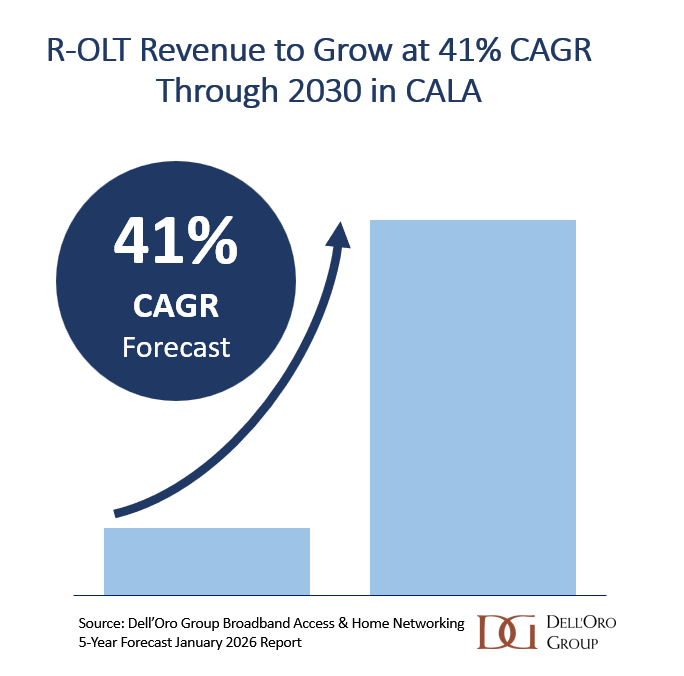
Last week, izzi, Mexico’s largest cable operator, announced that it was deploying Harmonic’s cOS virtualized broadband platform alongside its Pearl Remote Optical Line Termination (R-OLT) modules and Pearl outdoor node enclosures to extend its fiber network. The announcement is noteworthy because it is further evidence of the region’s cable operators continuing a wholesale shift away from DOCSIS and HFC to fiber. But it is also noteworthy in that it signals a shift towards more flexible R-OLT platforms as the fiber foundation for both cable operators and telcos in the region. Latin America is experiencing a fiber overbuild cycle that, in many markets, is more aggressive than anything North American cable operators have faced. Lower labor costs across the region have made greenfield fiber construction economically viable for a wide range of players — telcos, utilities, and new entrant ISPs — reshaping competitive dynamics almost city by city.

The specific benefits of R-OLTs are well matched to what izzi and other telco and cable operators in the region need to execute a large-scale fiber migration efficiently and competitively:

  • Reduced fiber feeder costs. Traditional centralized OLT deployments require operators to run long fiber feeder routes from a headend or hub site out to the access network. R-OLT platforms eliminate much of that feeder infrastructure by pushing the OLT function out to the node, dramatically shortening the fiber runs required to reach subscribers. In a market where izzi is deploying across a large and geographically diverse service territory, that reduction in feeder fiber translates directly into lower capital expenditure per home passed. Just as important as reduced capex is the faster time-to-market that an R-OLT architecture can provide.
  • Ability to leverage existing node infrastructure. One of the most underappreciated advantages of R-OLT platforms for cable operators is the ability to reuse what they already own. Izzi has an established outside plant with node locations distributed across its footprint — real estate, conduit, power feeds, and field infrastructure that took years and significant capital to build. Being able to drop into those existing locations rather than requiring new facility construction to keep overall deployment costs down and to get to market faster.
  • Right-sized port density and scalability. R-OLT modules are built for high PON port density within a compact form factor, which matters significantly when you’re trying to maximize the number of subscribers serviceable from a single field location. Higher port density means fewer node sites required to cover a given subscriber footprint, fewer truck rolls per unit of coverage, and a more scalable architecture as izzi expands its fiber deployment over time. It also provides a cleaner path to adding capacity incrementally as subscriber uptake grows, rather than requiring operators to over-provision upfront
  • Power and space savings. Traditional OLT cabinet deployments carry substantial power and space requirements — challenges that become acute when you’re trying to deploy at scale across a distributed field network rather than in a controlled headend environment. Optical node housings are designed for outdoor deployment with power consumption and thermal management designed for the field, not the headend. For izzi, those savings compound across hundreds of node sites over the course of a multi-year rollout, with meaningful implications for both capital and operating expenditures.


The Remote OLT Trend in Latin America

izzi’s decision is not happening in isolation. R-OLT as an architecture is gaining traction across Latin America largely because it aligns well with the region’s deployment realities. Unlike central office OLT deployments that require operators to run long fiber runs from a headend or hub site out to the field, a R-OLT pushes the OLT function closer to subscribers — reducing fiber costs, improving latency, and allowing operators to expand incrementally without massive upfront infrastructure investment.

The broader point is that Latin American cable operators looking at fiber migration are increasingly finding that R-OLTs strike a favorable balance of deployment cost, operational simplicity, and competitive positioning. The architecture doesn’t require operators to choose between upgrading their HFC plant and building fiber — it gives them a fiber-first path that can be executed in parallel with or as a replacement for legacy infrastructure, depending on the specific competitive and financial dynamics of a given market.

Harmonic certainly isn’t the only R-OLT supplier benefiting from this trend. Huawei and ZTE both have node-based OLT platforms they have been shipping into the CALA market for some time. Calix and Vecima have also found some traction for node-based OLT platforms in the region.


ONT Flexibility Just as Critical

One detail in the announcement that deserves more attention than it typically gets: izzi’s deployment integrates third-party ONTs through Harmonic’s Open ONT strategy. This is not a trivial design choice. CPE procurement is one of the larger ongoing cost variables in a multi-year fiber deployment, and vendor lock-in on ONTs has historically been a significant source of margin erosion for operators. By explicitly engineering an open ONT architecture into the deployment, izzi retains the flexibility to source CPE competitively as the deployment scales, rather than being captive to a single supplier’s pricing and roadmap.

For operators in Latin America where broadband ARPU is often significantly lower than in North American markets, total cost of ownership discipline in CPE is a necessity. It can be argued that ONT costs are a significant reason why Huawei, ZTE, Fiberhome, Humax, and Skyworth have found success in the region. Offering operators low-cost GPON ONTs has helped reduce the success-based capex budgets for operators in Brazil, Argentina, Mexico, and Uruguay, among others. For izzi, being able to mix-and-match ONTs will give them pricing leverage as they look to expand their fiber homes passed and connected.

[wp_tech_share]

Whenever OpenVault releases its quarterly OVBI (OpenVault Broadband Insights), there is always a lot of fascinating data regarding broadband usage to digest. The Q4 report is no different. In fact, the most recent iteration is the first one to provide an apples-to-apples comparison of upstream data consumption on DOCSIS and FTTH networks, quantifying one of the biggest gaps the industry has understood for some time.

According to the report, which is a sampling of usage metrics from across a select number of ISPs, FTTH subscribers provisioned at symmetrical speeds averaging 677 Mbps consumed 93.0 GB of upstream bandwidth in Q4 2025. Their DOCSIS counterparts at the same operator — provisioned at a much lower 17.3 Mbps upstream on average — consumed just 56.0 GB. That’s a 66% difference in upstream consumption. That gap isn’t driven by different subscribers with different habits. It’s the same operator, serving roughly the same markets. The only meaningful variable is how much upstream capacity each subscriber was given.

The implication, of course, is twofold: The first is that, given additional upstream bandwidth, subscribers will definitely use it and likely appreciate it; the second is that mid-split, high-split, and spectrum expansion efforts for DOCSIS networks can’t come soon enough.

The vast majority of cable operators are already well underway with both mid- and high-split upgrades, pushing their available upstream spectrum from 5-42 MHz to 85-204 MHz, which translates into upstream speed tiers moving from an average of 20 Mbps to 100 Mbps-200 Mbps. This is certainly an improvement and gets them into the conversation with comparable FTTH speed tiers.

One factor to keep in mind when parsing this data is that the OVBI notes that most FTTH subscribers are provisioned at the mid-range tiers of either 200-400 Mbps or 500-900 Mbps, rather than at the 1 Gbps tier. Meanwhile, roughly 34% of DOCSIS subscribers are provisioned at the 1 Gbps tier. The difference is due to the fact that, since they are offered symmetric services, FTTH subscribers don’t have to move up to faster downstream packages in order to access higher upstream speeds. On the other hand, for DOCSIS customers to access improved upstream speeds, they must move to the 1 Gbps downstream tiers, which typically offer upstream speeds of 100-200 Mbps.

What ultimately makes the FTTH vs. DOCSIS comparison so consequential is the broader upstream growth trend it sits on top of. According to the report, full-year 2025 upstream usage averaged 55.86 GB across fiber and DOCSIS platforms — a 21.7% year-over-year increase, and a 16.4% jump just from Q3 to Q4 alone. To put that in perspective, the quarter-over-quarter jump in upstream usage is nearly as large as the annual gains from just a couple years ago.

This isn’t a new trend, by any stretch. It is more of a continuation of a trend that was first seen during the pandemic, when residential broadband consumption—both upstream and downstream—skyrocketed. As students have returned to school and employees have returned to the office, the average growth in downstream consumption has moderated and stayed relatively modest. Upstream consumption, however, has continued to surge, with average annual growth rates ranging from 17-22% since 2022.

For cable operators, specifically, this sustained growth in upstream traffic accelerates the timeline for band-split upgrades in the short-term, followed by overall spectrum expansion in the medium term. Most cable operators have been managing upstream utilization rates on the assumption that demand growth was going to moderate, just as it has on the downstream side. Compounding things is the fact that, when comparing with FTTH, the report suggests that opening up more upstream spectrum won’t result in a gradual increase in upstream utilization; it will instead result in a fairly quick acceleration as the latent subscriber demand demonstrates. This is already evidenced by the fact that upstream usage on DOCSIS 3.1 networks is easily double what it is on DOCSIS 3.0 networks. Once again, if the bandwidth is available, subscribers will find a way to maximize it.

For cable operators, many of which are now seeing consistent quarterly broadband subscriber losses, whether the asymmetric design of their DOCSIS networks has truly become a weakness has to be one of the many questions they are asking themselves. Of course, with a large percentage of subscribers leaving for lower-cost FWA services, asymmetry takes a back seat to more immediate concerns around service bundling and pricing.

But when their DOCSIS subscriber base generates 66% less upstream traffic than FTTH subscribers, there has to be genuine concern that upstream constraints are pushing subscribers into the arms of fiber overbuilders offering symmetric speeds.

[wp_tech_share]

The broadband industry’s relentless march toward multi-gigabit speeds is hitting a wall—not a technical one, but a practical one. As we look toward 2026, the competitive battleground is shifting from headline speeds to experiential quality. Operators across fiber, cable, FWA, and LEO satellite are recognizing that reducing latency, minimizing jitter, and ensuring rock-solid reliability matter more to customer satisfaction than offering 2, 5, or even 10 Gbps services that customers neither need nor fully utilize.

Let’s start by taking a look at the specific technologies and operator implementations that will fuel the drive towards better broadband:

  • XGS-PON and Beyond: Latency Takes Center Stage:

    While the industry continues its migration from GPON to XGS-PON, the focus has shifted from the 10G headline number to the latency improvements these platforms enable. Modern XGS-PON deployments are achieving sub-5ms latency consistently, with operators like AT&T leveraging dynamic bandwidth allocation to minimize jitter for latency-sensitive applications. The real innovation isn’t the speed—it’s the intelligence baked into these platforms that enables real-time traffic prioritization and quality assurance. This quality-first approach is fundamentally reshaping PON roadmaps, pushing large-scale 50G PON adoption out by 3-5 years as operators instead invest in XGS-PON enhancements that deliver immediate quality improvements. Cooperative DBA (Dynamic Bandwidth Allocation), low-latency scheduling, and time-sensitive networking (TSN) features provide tangible benefits and competitive advantages today.

  •  Edge Computing and CDN Proliferation:

    The push toward edge computing is fundamentally reshaping broadband access network architectures. Comcast’s deployment of vCMTS pods throughout its footprint exemplifies this trend, bringing content and compute functions within 10-20 miles of end users. This isn’t about bandwidth—it’s about ensuring that cloud gaming, AR/VR applications, and real-time collaboration tools perform flawlessly regardless of peak usage times. It is also about accommodating shifting traffic patterns and priorities on a per-service group and per-customer basis. No one knows the potential impact that agentic AI will have on potential bandwidth utilization. In fact, it is likely to have little impact on total bandwidth consumed. Instead, the likely scenario is that real-time responses and interactions will become the norm and the expectations of all broadband users. Ensuring that level of performance is again far more about latency, jitter, and other traffic characteristics than it is about sheer throughput.

  • Network Slicing and Service Differentiation:

    5G’s network slicing concept is now migrating to fixed broadband networks and services. Charter and other operators are experimenting with virtual network slices that guarantee specific latency and jitter parameters for different service tiers—not faster speeds, but guaranteed performance for work-from-home, gaming, or healthcare applications. In this context, network slicing goes way beyond traditional policy enforcement. Instead, the focus here is on creating a virtual, dedicated network within your existing hardware and software resources, as well as your spectrum and wavelengths. GFiber and Nokia demonstrated a proof-of-concept whereby network congestion was simulated on a residential Wi-Fi network that resulted in significant lag and pixelation  for online gamers. A dedicated, on-demand network slice was established from the Wi-Fi gateway all the way to the core of the network, which alleviated the performance issues for the gamers. While the technology is certainly available to take this from a POC to a live service, the bigger question for operators is how (and if) they can monetize this service. Or perhaps it simply becomes an expected feature of all broadband networks, as its goal is to improve the user experience.

  • Wi-Fi 7 and Intelligent Home Networking:

    Speaking of user experience, the home network remains the Achilles’ heel of broadband quality. Wi-Fi 7’s multi-link operation (MLO) and deterministic latency features represent a quantum leap in reliability. But the real game-changer is the intelligence layer operators are adding—AT&T’s Smart Home Manager and Comcast’s xFi platform are evolving from basic management tools to AI-driven optimization engines that proactively identify and resolve issues before customers notice them.


But “Better and Bigger” Will Also Be a Major Theme

The emphasis on delivering high-quality and reliable broadband services, as opposed to just faster broadband services, will also underpin another ongoing shift in the market this year. Continued consolidation among broadband providers will deliver improved broadband quality across larger, more unified footprints. Hence, “better and bigger.” With fixed wireless having shown cable’s vulnerability in many major markets, the race is on to expand network footprints while also taking advantage of access and core technologies that improve service quality and reliability over multiple physical layers.

To start off the year, Verizon expects to close on its $20 B acquisition of Frontier in the first quarter of 2026. The imminent transaction isn’t only about adding fiber passings—it’s also about acquiring a mature operation with established network intelligence systems. It took significant time and capital to get Frontier’s network to this point. But it has paid off in improved customer satisfaction and NPS (Net Promoter Score).

Both AT&T and T-Mobile are following similar paths to network expansion, employing multiple buildout strategies incorporating FWA, direct fiber builds, joint venture partnerships, and third-party wholesale arrangements. The operators’ diversified approaches to fiber deployments provide significant competitive advantages. While pure-play fiber companies like Google Fiber focus primarily on high-density markets, and cable companies upgrade existing infrastructure, AT&T and T-Mobile’s multiple models allow them to compete effectively across the entire market spectrum.

This flexibility has become increasingly important as competition intensifies. In markets where Comcast or Charter might have cable infrastructure advantages, AT&T and T-Mobile can leverage joint ventures or wholesale arrangements to maintain competitive presence without overextending capital resources. In rural markets where traditional competitors might not venture, government partnerships and wholesale arrangements enable both operators to capture market share in underserved areas.

Most importantly, with both operators stamping their approval on these networks in the form of their very recognizable and respected brand names, we fully expect that quality and reliability standards enforced across their existing networks and services will be easily transferred to their expanded network footprints.


The Impact of SpaceX and Amazon LEO

Of course, any discussion around bigger or better broadband in 2026 must include the budding LEO rivals SpaceX and Amazon. Collectively, both providers are set to receive about 21% of the BEAD location awards, resulting in coverage for approximately 888 K locations across the US. Though the companies are only set to receive about 4% of the $20 B in awards from the BEAD program, the discrepancy in total revenue versus total locations served is the reason why the satellite operators were selected. The average BEAD subsidy for SpaceX runs $500-$2,000 per location, compared to $3,700-$8,600 per location for fiber in the same states. States are making rational economic choices. When you’re connecting 10 homes across 50 square miles of mountainous terrain, the fiber business case collapses.

And now with SpaceX preparing for a massive IPO in 2026 that could value the company at nearly $1.5 trillion, it could very easily expand its Starlink coverage globally, purchase additional spectrum across global markets, and build out an entire, low-Earth orbit AI infrastructure whose scale would be unmatched. Its recent EchoStar spectrum purchase wasn’t just about the immediate direct-to-cell opportunity.  It’s about capturing the entire long tail of connectivity markets where traditional infrastructure economics fail. The BEAD awards validate the model. The carrier partnerships provide distribution. The spectrum enables the product roadmap. Together, they represent competitive repositioning that forces every terrestrial operator to recalculate their rural strategy.

The big question in 2026 and beyond is how Amazon responds. Jeff Bezos has already convinced key terrestrial communications providers that SpaceX shouldn’t be a monopoly, even if Amazon will be playing catch-up in the constellation race. Now, Bezos will have to quicky demonstrate its ability to get satellites in space and services up and running, meeting some stringent quality and reliability requirements established by both NTIA and the individual states.


Moving Forward

The “better not bigger” trend represents a maturation of the broadband industry. We’re moving from a “build it and they will come” mentality to a nuanced understanding of what actually drives customer satisfaction and reduces churn. Operators that successfully execute this transition—investing in intelligence, edge computing, and reliability over raw speed—will build sustainable competitive advantages that are much harder to replicate than simply lighting up another fiber wavelength.

As 2026 approaches, expect marketing messages to shift from “up to X Gbps” to “guaranteed performance,” from speed tests to quality scores, and from bandwidth tiers to application-specific assurances. The operators who recognize this shift early and invest accordingly won’t just retain customers—they’ll steal them from competitors still fighting yesterday’s gigabit war.