[wp_tech_share]

Preliminary findings suggest Massive MIMO RAN revenues reached new record levels in 2022. At the same time, year-over-year comparisons are becoming more challenging and the implications are that growth is slowing. With Massive MIMO revenues expanding at a low-single-digit rate in 2022, the timing is right to review market status and near-term expectations.

Market Status

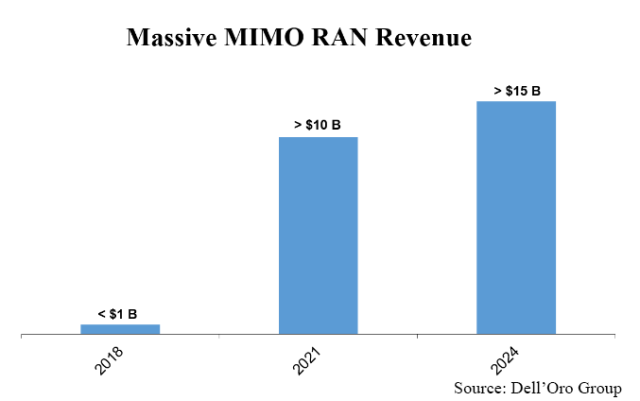
For a technology that was initially viewed as being mostly fit for high-traffic locations, Massive MIMO has come a long way in just a few years, ramping at a much faster pace than initially expected. Our most recent analysis suggests global Massive MIMO RAN revenues, which includes baseband and radio revenues for large-scale antenna systems featuring > 8T8R sub-6 GHz LTE and NR radio configurations, increased more than 20-fold between 2018 and 2022, propelling total Massive MIMO revenues to reach new record levels.
Helping to drive this output acceleration is the fact that Sub-6 GHz Massive MIMO combined with larger swaths of upper mid-band spectrum delivers superior coverage, capacity, performance, energy per bit consumption, and TCO tradeoffs relative to both the low-band and mmWave spectrum. Consequently, the Massive MIMO vs. Non-Massive MIMO ratio is typically high in the upper mid-band.
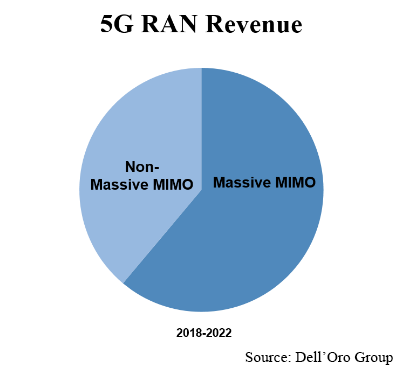
Regional adoption has been fairly broad based, driven by synchronized upper mid-band rollouts in especially the Asia Pacific region. Wide-band 5G deployments are now ramping up in Europe and North America. But as Ericsson recently pointed out, upper mid-band coverage in Europe is still just around 15% to 20%, significantly lagging the global average.

Most initial modeling was focused on the incremental capacity upside with Massive MIMO. But as we now understand, it is actually the coverage benefits with Massive MIMO and the ability for operators to leverage their existing site assets and realize nearly equivalent 5G coverage with the upper mid-band as with 4G that has been the most important attribute of Massive MIMO in this initial deployment phase.

In addition to the economic benefits, the ability to leverage the existing macro grid is also reducing the time required for network construction, which generally follows a similar pattern with operators addressing high-traffic areas first before transitioning towards less dense populations. Larger countries can realize nationwide coverage in around ~3 years while smaller countries are able to upgrade the first base layer in 1 to 2 years.

Although Massive MIMO requirements and performance will vary depending on a confluence of factors including the inter-site distance (ISD), traffic characteristics, and vertical user spread, operators in China have so far been favoring the capacity, coverage, and performance benefits with the 64T64R configuration while the 32T32R configurations have been favored outside of China, though continued innovation will likely change how operators think about this mix. One of the Korean operators is reporting performance and capacity gains in the order of 30% after upgrading the radios from 32T32R to 64T64R. And with RAN still accounting for around 15% of the overall site opex and wireless capex, the price premium with the 64T64R is justified in most scenarios with ISDs of 500m or less.
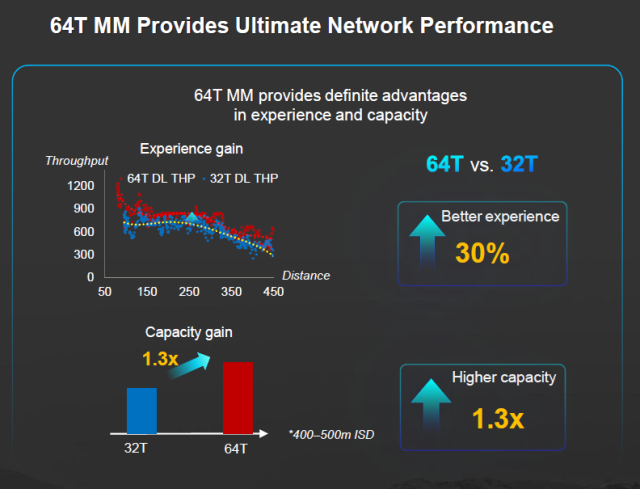
 

Source: Huawei


As the ISDs are increased, the relative gains slow – Per Ericsson’s Massive MIMO handbook, the relative cell-edge throughput gains with 64T64R vs. 32T32R are in the single digits as the ISD approaches 750m, boosting the business case for the 32T32R configuration.
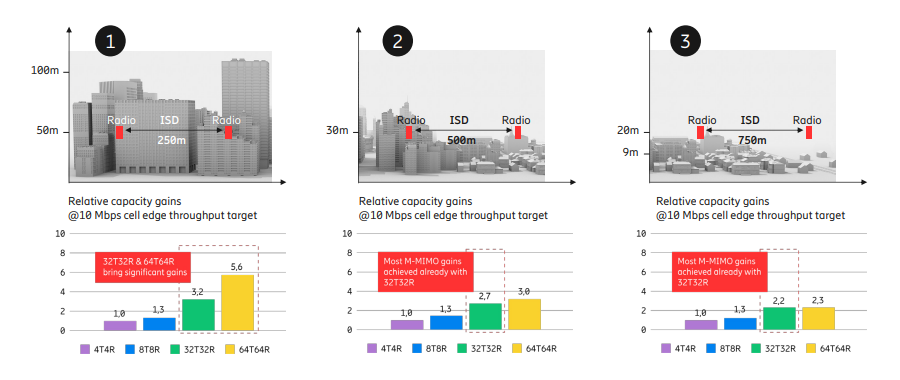
Source: Ericsson


At the same time, the 64T64R business case for greater ISDs is expected to evolve over time as technology advances and prices improve. And in some cases, vendors believe this reality is already here. Huawei recently released data suggesting the coverage and capacity gains between the 64T64R and 32T32R can already be justified in some 700m ISD scenarios.
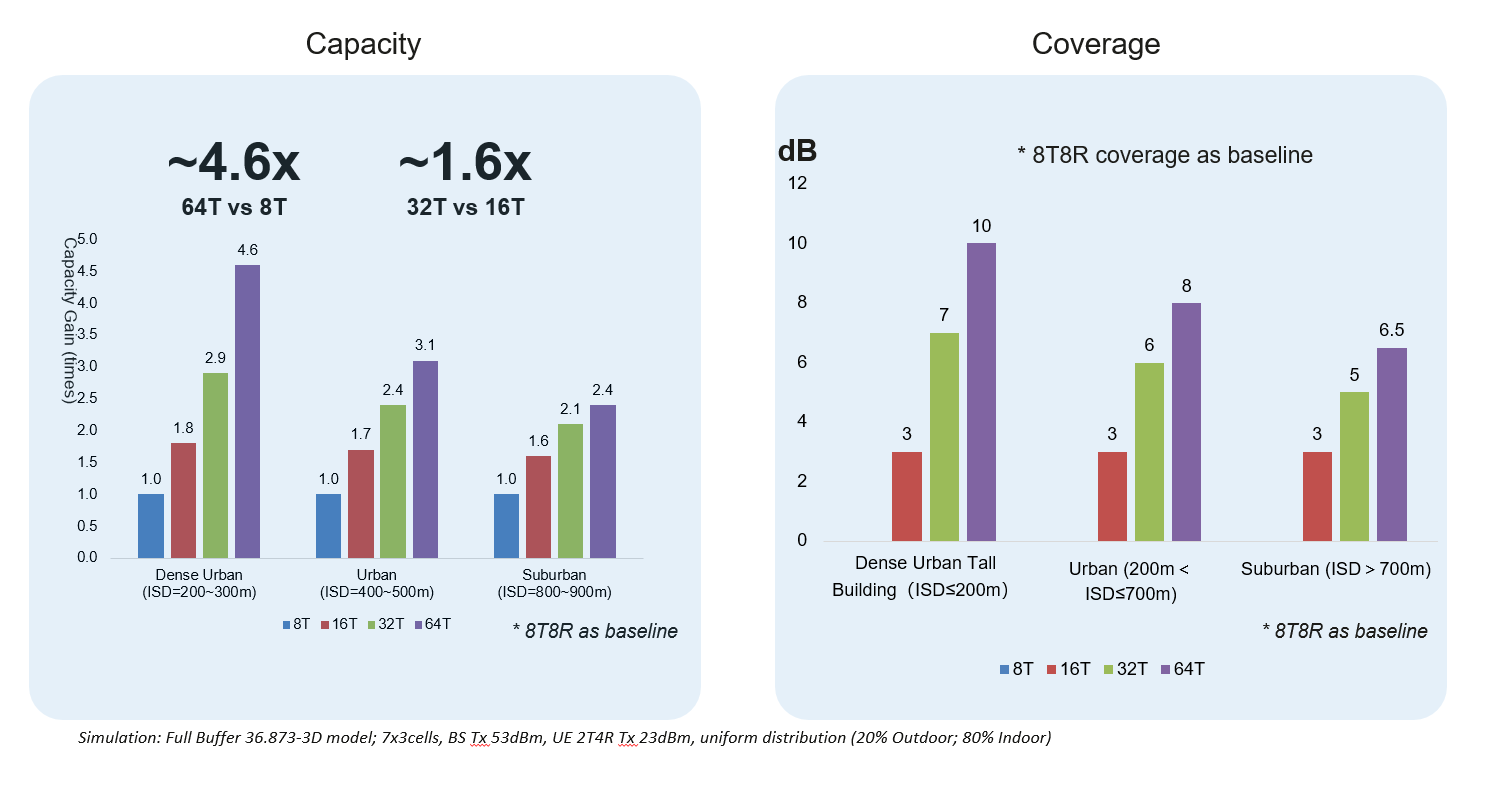
Source: Huawei


Forecast

Following the surge in global Massive MIMO investments between 2018 and 2021, preliminary findings suggest growth slowed in 2022, in part because of the state of upper mid-band 5G and more challenging comparisons in the more advanced markets such as China, South Korea, and the US. As we look forward, Massive MIMO investments are expected to remain elevated, however, global growth is projected to soften as output acceleration in Europe, North America, and parts of APAC will be offset by slower growth in the advanced markets. Taken together, we are forecasting Massive MIMO revenues to increase by nearly 20% by 2024, relative to 2021 levels.

In addition to MBB, FWA will also play an important role in the broader broadband toolkit as operators figure out the right balance between the capacity requirements and the overall profitability for the various FWA segments. Huawei estimates that the improved coverage with its latest MetaAAU product can have a material impact on the FWA business case.

Next, Massive MIMO will also play a role in supporting 2 GHz FDD. This spectrum is more challenging, however, the vendors are doing everything they can to improve the form factor. And while the 2 GHz FDD Massive MIMO market will not be as large as the upper mid-band TDD market and likely be confined to hotspot scenarios, it is worth pointing out that Huawei has already deployed 20 K+ FDD-based Massive MIMO AAUs.

Finally, continuous product improvements are expected to shorten the lifespan relative to the standard RRU products – some operators are already swapping out Massive MIMO radios deployed just two years ago for newer more efficient, and higher-performing radios.

Preliminary MWC announcements suggest Massive MIMO remains a priority from an R&D perspective as the products are evolving rapidly with incremental advances improving the form factor, weight, power output, performance, bandwidth, cost, and price.

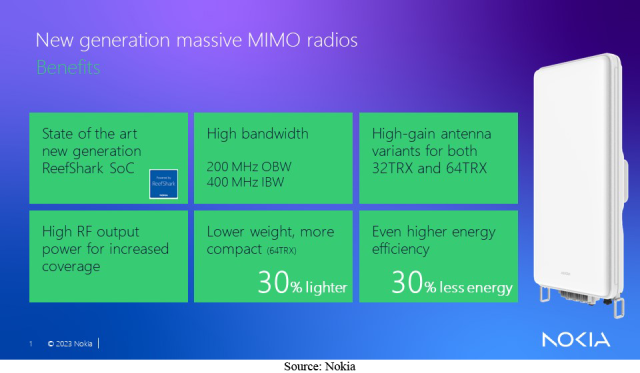
Not surprisingly, the form factor has improved rather significantly with leading vendors now offering 64T64R radios weighing just 17 kg to 20 kg, down from the 40 kg+ range just a few years ago.  And both Ericsson and Huawei are now offering 32T32R AAUs weighing 12 kg and 10 kg, respectively, ideal for footprint-optimized capacity. Nokia is offering a 400 MHz BW 32T32R AAU weighing 17 kg.

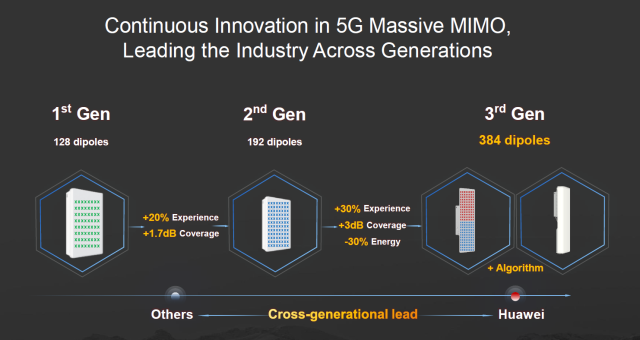
Even though the Massive MIMO concept is relatively new, some vendors are already releasing 3rd generation products – Huawei’s latest MetaAAU utilizes 6 dipoles per radio chain. So compared with the traditional 192 array AAU, the extremely large antenna array (ELAA) uses 384 dipoles.
 

Source: Huawei


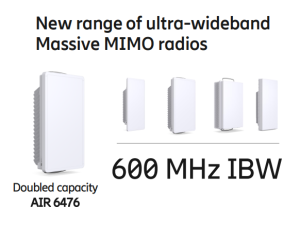
Also, Ericsson recently also announced a new range of ultra-wideband Massive MIMO radios with IBW spanning 600 MHz in a 30 kg form factor. Similarly, Nokia also announced its next generation Massive MIMO Habrok powered by ReefShark radios.


Source: Ericsson


In short, Massive MIMO will continue to play a pivotal role with both 5G and 5G-Advanced, and the competitive landscape will remain fierce. The days of exponential growth are in the past but there is still more upside ahead to support TDD MBB expansions in the less advanced markets, FDD hotspot deployments, FWA, and TDD product refresh.
[wp_tech_share]

With 2022 now almost in the rear-view mirror, the timing is right to review how the RAN market is unfolding, and more importantly, what is on the horizon for 2023. In this blog, we will review three projections regarding the overall RAN market, 5G, and Open RAN.

1) Total RAN to decline in 2023

In retrospect, the market has evolved over the past year. Going into 2022, we projected that the RAN market would advance at a mid-single digit rate in 2022 in nominal USD terms, supported by strong growth in North America and modest growth in China, Europe, and other parts of the Asia Pacific.

While we don’t have the complete picture yet as we only have data for the 1Q22-3Q22 period, it is safe to assume that the high-level projections for both China and North America were reasonable, barring any major 4Q22 surprises. Still, we also need to recognize that RAN investments in Europe and Asia Pacific excluding China are tracking below our projections for the 1Q22-3Q22 period.

This gap in the output acceleration is primarily driven by forex fluctuations and prices – base station volumes and overall 5G activity are mostly in line with expectations, but the revenue per base station was impacted as the USD gained against most major currencies throughout 2022.

As we look into 2023, the regional mix will evolve. India, which is a smaller part of the RAN market in 2022, will be one of the bright spots going forward. Per our recently published 5-year RAN forecast, we are modeling an intense 5G deployment phase over the next 3 years, and this will already show up in the numbers this year and almost be enough to offset more challenging comparisons in North America and China.

2) 5G RAN will grow at a double-digit rate in 2023

As we now know, 5G investments have increased at a remarkable pace since the first NR networks were launched back in 2018, resulting in a 5G ascent that has been much steeper and broader relative to what we experienced with previous technology shifts. The challenge now is that the 5G comparisons are becoming more challenging in the advanced markets. And the implications are that 5G RAN growth rates will subside somewhat going forward.

At the same time, our long-term thesis still holds. We are still in the early days of the broader 4G-to-5G transition and incremental capex will be required beyond the initial coverage layer to support all the frequency flavors and use cases. In other words, the days of exponential 5G RAN growth are clearly in the past, however, 5G RAN revenues are still expected to advance at a double-digit rate in 2023.


3) Open RAN to account for 6% to 10% of RAN Market in 2023

The Open RAN movement has come a long way in just a few years, propelling Open RAN revenues to accelerate at a faster pace than initially expected. Going into 2022, we projected Open RAN would comprise around 3% of the full-year 2022 market. Per our 3Q22 RAN report, our analysis indicates Open RAN revenues surged at a much steeper pace than expected spurring Open RAN to comprise a mid-single digit share of the full-year capex.

Meanwhile, the underlying message that we have communicated now for some time has not changed. The early adopters are embracing the movement, however, there is more uncertainty when it comes to the early majority operator and the impact on the supplier dynamics. Per the 3Q22 RAN report, the rise of Open RAN has so far had limited impact on the broader RAN market concentration—we estimate that the collective RAN share of the top 5 RAN suppliers declined by less than one percentage point between 2021 and 1Q22–3Q22.

Still, our position remains unchanged. Even with the underwhelming progress by the smaller Open RAN focused suppliers and the challenges ahead to cross the chasm, we believe this will not be enough to derail the movement toward openness. Following the surge in 2022, Open RAN radio revenue growth will slow in 2023, reflecting a more challenging comparison with the early adopters.

In short, it will be an interesting year. As with any forecast, there are risks. Please come back as we update the RAN analysis to reflect all the latest developments.


Watch This Video:

What’s next for RAN market in 2023?

[wp_tech_share]

The millimeter wave (mmWave) narrative has gone through multiple iterations since researchers and industry experts predicted 5G would be all about mmWave back in 2010. As we now know, mmWave accounted for about 1% to 2% of the 2021 RAN market and near-term growth prospects are failing to impress.

[wp_tech_share]
Mobile networks continue to advance to support changing supply and demand requirements. In order to manage the rise in mobile data traffic and the diversity of the use case requirements with new technologies, frequencies, and more agile networks without increasing the complexity and costs while still maintaining legacy technologies, mobile networks have to become more intelligent and automated, spurring the need for Intelligent RAN. In this blog, the goal is to update the Intelligent RAN blog we previously posted and review Intelligent RAN drivers, market opportunity, current status, and the ecosystem.


Intelligent RAN Automation Background

RAN automation and intelligence are not new concepts. In fact, both existing and new 4G and 5G networks rely heavily on automation to replace manual tasks and manage the increased complexity without growing operational costs. But the use of intelligent machine-learning-based functionality embedded in the management system and RAN nodes for real time and non-real time processing is new. The combination of machine learning and automation will enable operators to evolve their 5G networks to the next level by autonomously optimizing resources resulting in improved cost and energy budgets.

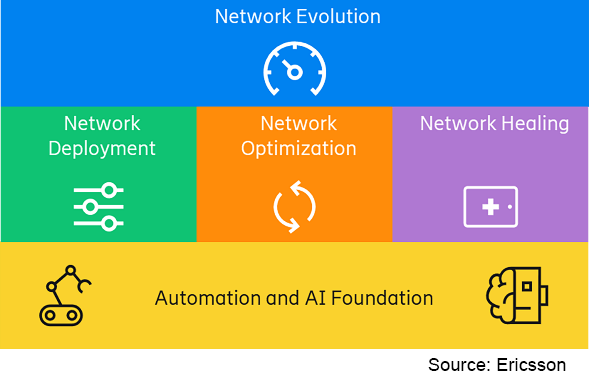
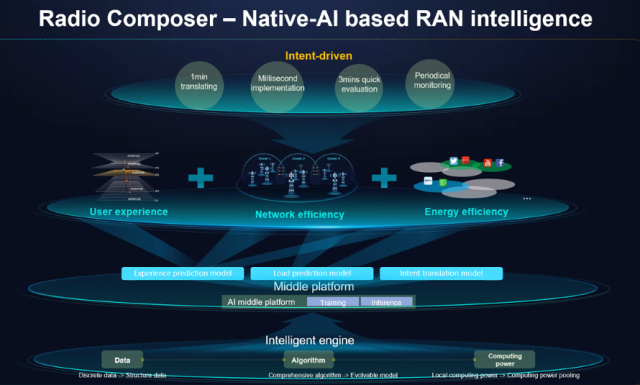
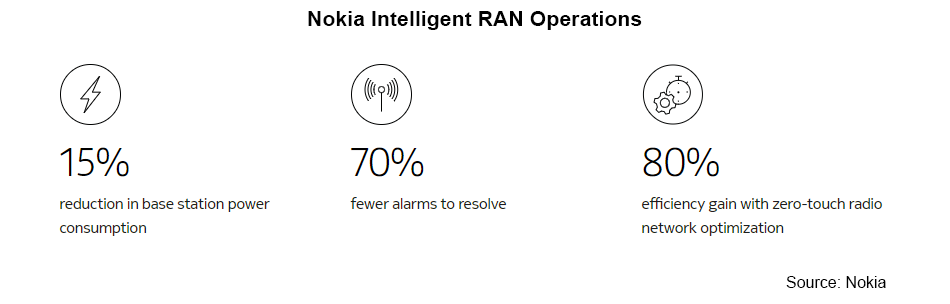
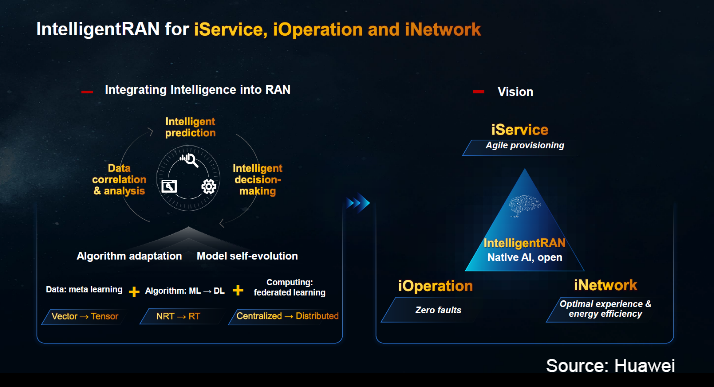
Intelligent RAN Automation is not confined to just the RAN infrastructure. Instead, these solutions will improve performance, reduce energy consumption, and lower costs across multiple infrastructure and service domains. Huawei envisions its IntelligentRAN portfolio will address three key areas, including networks, services, and operations. Similarly, Ericsson’s Intelligent RAN Automation solution is targeting four main areas: Network evolution, network deployment, network optimization, and network healing. And Nokia’s recently launched Intelligent RAN Operations is targeting operational efficiency gains and equipment power savings across multiple domains. ZTE’s radio composer is targeting three key domains, including user experience, network efficiency, and energy efficiency.

Source: ZTE


Why More RAN Intelligence and Automation?

Operators navigated the LTE era successfully with minimal RAN intelligence. And even if MBB and FWA are now driving the lion’s share of operators’ 5G revenues, we need to keep in mind that 5G is more diverse than LTE from a spectrum, technology, end-user requirements, and applications perspective.

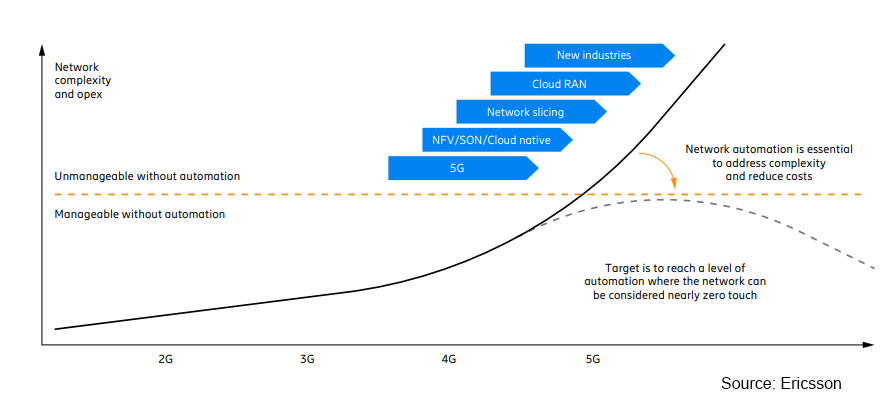
As mobile data traffic continues to grow at an unabated pace while carrier revenue growth remains flat, operators have limited wiggle room to expand capex and opex to manage the increased complexity typically inherent with the technological and architectural advancements required to deliver the appropriate network performance while supporting more demanding and diverse end-user requirements.

Maturing AI capabilities taken together with recent technology advances which allow suppliers to place intelligence inside the base station forms the basis for the uptick in Intelligent RAN.

Leading RAN suppliers envision Intelligent RAN automation will deliver several key benefits:

  • Maximize ROI on network investment
  • Improve performance and experience
  • Boost network quality
  • Accelerate time to market
  • Reduce complexity
  • Reduce energy consumption
  • Bring down CO2 emissions

The ongoing shift from proprietary RAN towards disaggregated Open RAN could accelerate innovation, however, costs and complexity of managing multi-vendor deployments could increase if the networks are not effectively managed. According to Ericsson, operator opex could double over the next five years without more automation across deployment and management & operations just to support the expected changes with MBB-driven use cases.


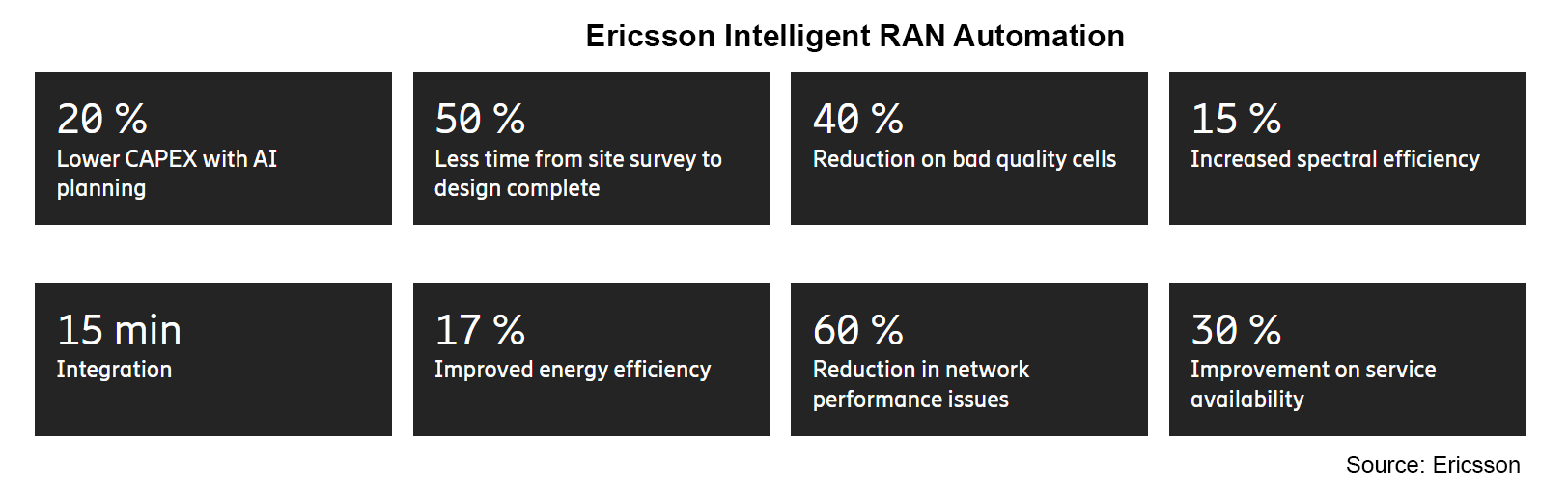
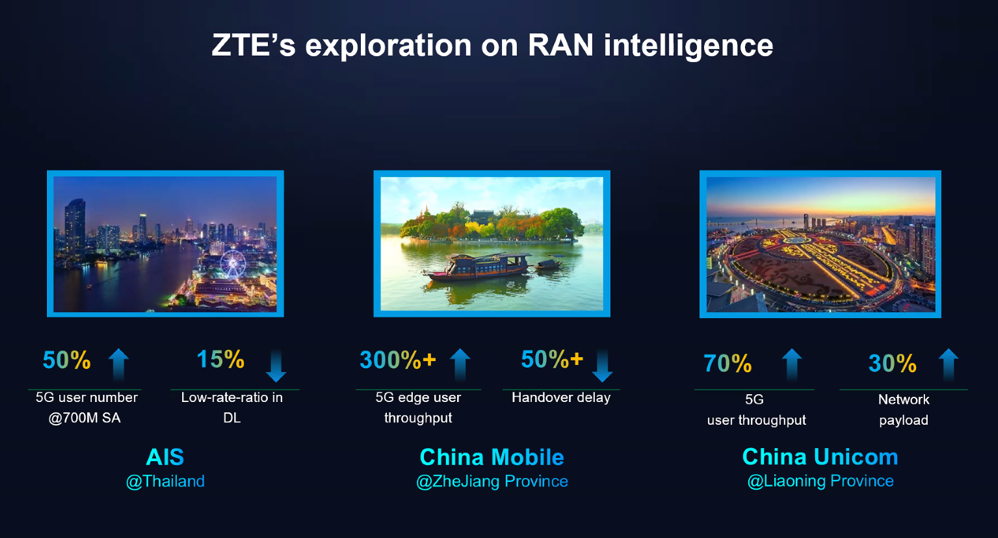
Performance gains underpinned by Intelligent RAN will vary depending on a confluence of factors. Ericsson estimates Intelligent RAN Automation solutions can improve the spectral efficiency by 15% while Huawei has been able to demonstrate that its IntelligentRAN multi-band/multi-site 3D coordination feature can improve the user experience by 50%, in some settings. ZTE and China Mobile have demonstrated a 3x throughput improvements at the cell edge plus a 50% reduction in handover delays.

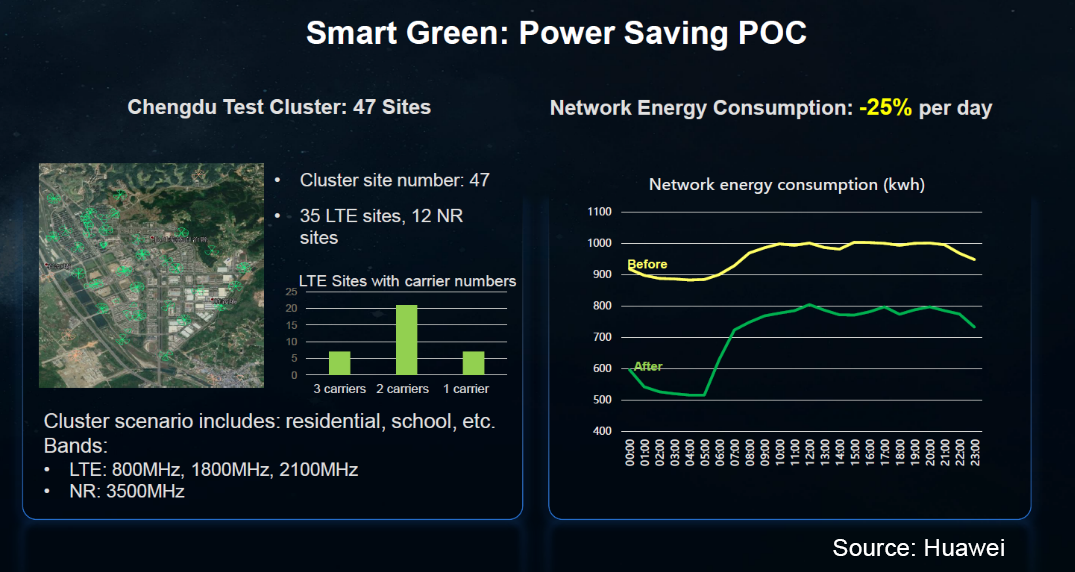
The intensification of climate change taken together with the current power site trajectory forms the basis for the increased focus on energy efficiency and CO2 reduction. Preliminary findings suggest Intelligent RAN can play a pivotal role in curbing emissions, cutting energy consumption by 15% to 25%.

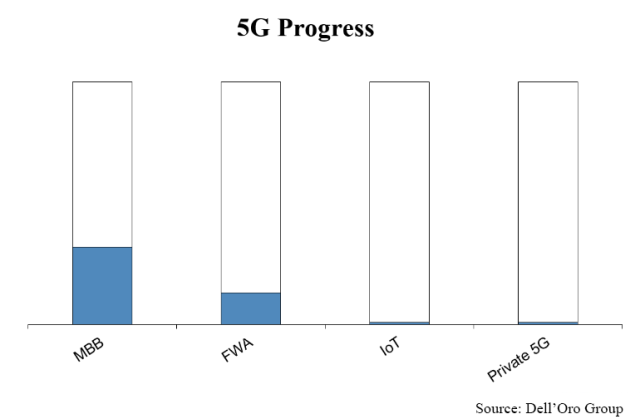
It is still early days in the broader 5G transition, with 5G MBB and FWA in the early majority and early adopter phases, respectively. However, 5G IoT has barely started yet. As private 5G and IoT begin to ramp more meaningfully and diverse use cases comprise a greater share of the overall 5G capex, operators will need to evolve their networks to manage varying latency, throughput, UL, positioning, and reliability requirements. Ultimately it will be extremely challenging to deliver optimal network efficiency across the RAN spectrum with the current networks.

This is why RAN intelligence and automation are increasingly viewed as fundamental elements in the broader digital transformation and autonomy roadmaps. Operators agree AI and automation will be essential components in future networks.


Market Opportunity

Global RAN revenues have grown at a torrid pace over the past couple of years. And even though RAN market is now entering a period of slower growth, total RAN revenues are projected to top $45 B by 2030, supported by 5G and 6G small cell and macro site expansions.

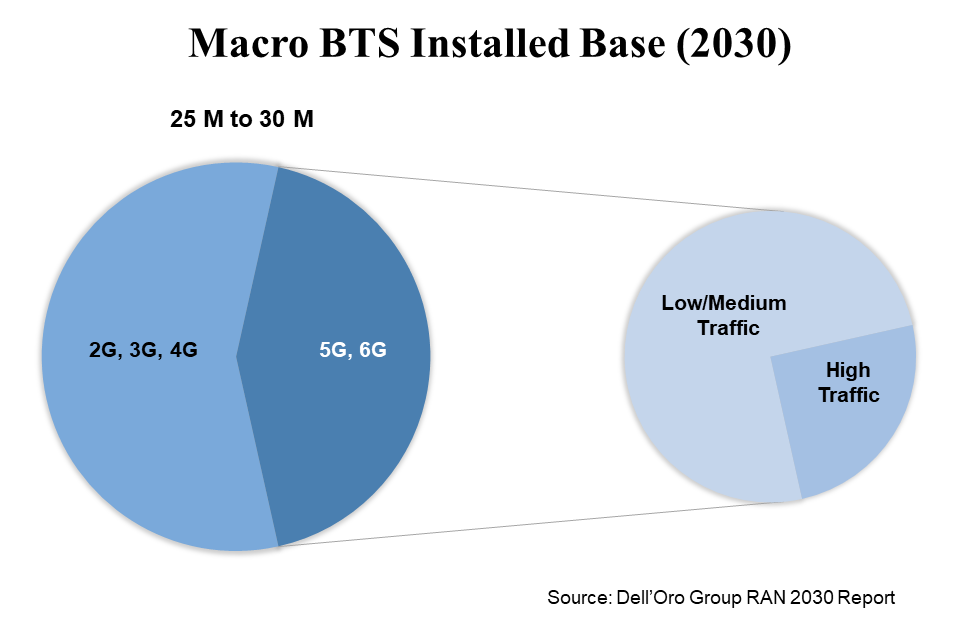
Intelligent RAN is not going to make sense in all base stations, at least for some time. However, the market opportunity is still significant, especially with high-traffic 5G and 6G sites.

The mix between distributed and centralized intelligence will to some degree be dependent on the fiber footprint as the amount of data to be processed is already large.

Relative to external AI, the local processing inherent with native AI could offer some benefits such as simplified network O&M and reduced costs, especially with low-latency and high-performance service requirements.


Intelligence and Automation Status

RAN Intelligence & Automation is a relatively nascent but growing segment. Rakuten Mobile’s focus on vRAN and automation has enabled the operator to deploy around 0.3 M macro and small cells while maintaining an operational headcount of about 250 people, which is a fraction of that of the typical operator. In the US, greenfield operator Dish is leveraging its cloud-native 5G network and IBM’s AI-powered automation and network orchestration software and services along with VMWare’s RAN Intelligent Controllers to manage costs and to improve performance and innovation for more diverse use cases.

Germany’s fourth operator, 1&1, is building a fully virtualized and open RAN network utilizing specially developed orchestration software to automate operations.

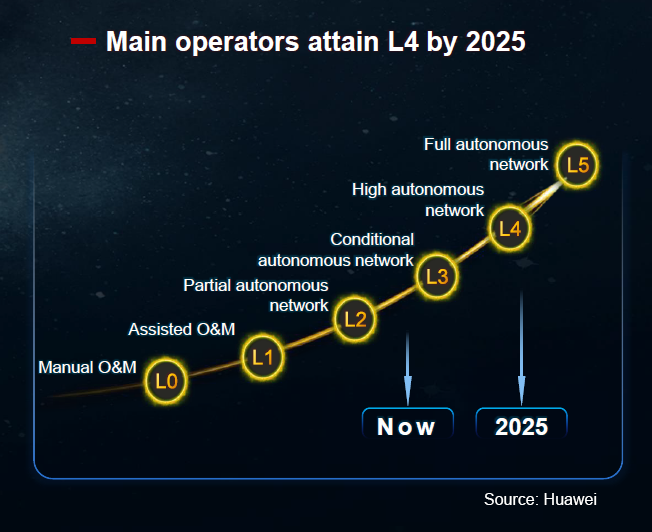
While most of the green field networks are clearly moving towards new architectures that are more automation conducive, change typically does not happen as fast with the brownfields – the average brownfield operator today falls somewhere in between L2 and L3 and still has some way to go before reaching high and full autonomy. Still, China Mobile remains on track for L4 automation by 2025. Per Huawei’s HAS2022 analyst event, the vendor remains optimistic L4 High autonomous network will be more prevalent by the 2025 timeframe. Rakuten Mobile previously said that its network could achieve L4 automation by the end of 2022.

Also, China Mobile has completed numerous AI-powered RAN trials, including one with Nokia’s RIC. The operator has already deployed 10K+ sites using ZTE’s Radio Composer. Meanwhile, China Unicom has implemented a commercial trial of ZTE’s AI solutions, increasing the average high-quality 5G experience duration by 30%.

Vodafone is using RAN Intelligence to boost network quality and to implement Zero Touch Operations. Deutsche Telekom believes the future of the RAN is open and intelligent – the operator is exploring how AI/ML can help with resource optimization and anomaly detections, among other things. Telefonica is working with Nokia to advance RAN intelligence and ultimately optimize the network using AI-based RIC.

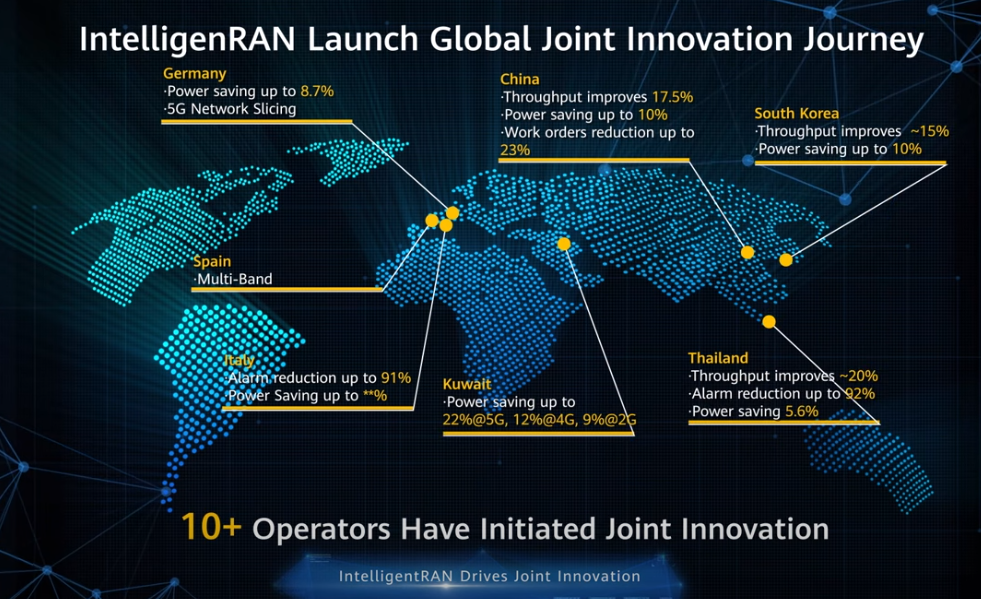
Also, Etisalat, Du, STC, and Zain announced at the SAMENA Telecom Summit that they are collaborating with Huawei to bring more AI into the RAN to improve the performance, reduce downtime, enhance the customer experience, and provide the right foundation for more RAN autonomy. At Huawei’s MBBF 2022 event, the vendor announced it has initiated joint innovation with more than 10 operators.

Source: Huawei


Vendor Ecosystem

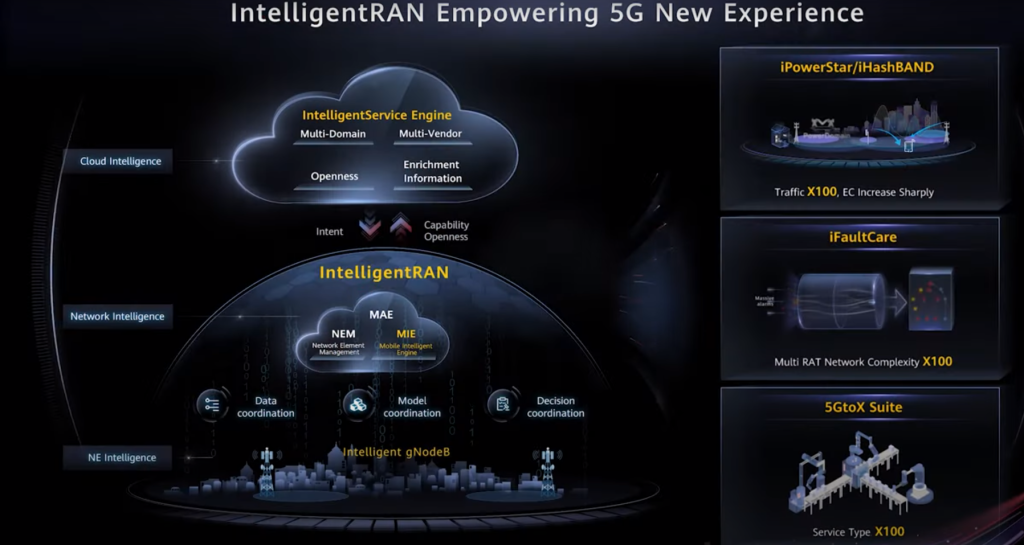
The top 4 RAN players are also heavily focused on improving their Intelligent RAN Automation portfolios. Huawei recently released its IntelligentRAN portfolio and envision its solution, using the Mobile Intelligent Engine (MIE), will be more widely available for both the Site and Network layers by 2023.

Source: Huawei


Meanwhile, both Ericsson and Nokia have recently announced enhancements and additions to their Intelligent RAN solutions. Qualcomm recently announced its intent to acquire Cellwize, a RAN SMO and Non-RT RIC supplier.


ZTE’s Radio Composer brings AI-based intelligence into the RAN – the vendor has already successfully demonstrated significant performance improvements in large-scale deployments across China and Thailand.

Source: ZTE


In addition to the established RAN suppliers, the rise of Open RAN provides an entry point for both smaller RAN suppliers and Non-RAN players such as NEC, Mavenir, Fujitsu, Juniper, and VMware to enter the RIC segment.


AI in 3GPP

The 3GPP standard is continuously evolving to address the broader 5G vision. From an automation and AI perspective, 3GPP already offers a basic foundation that the suppliers can build on to differentiate their solutions.

The network data analytics function (NWDAF) within the 5G Core architecture and defined in 3GPP Release 16, collects data and improves analytics capabilities.

Release 17 adds MDA and Autonomous Networks.  As the 3GPP is working on introducing additional AI/ML air interface and RAN improvements with Release 18, suppliers and operators are already bringing early explorations of these technologies to the base station and RAN management systems.

In summary, it is still early days in the 5G journey. Today’s networks are already leveraging automation to manage the increased network complexity. The network of the future will gradually include more automation and AI to provide operators and enterprises with the right tools to proliferate 5G connectivity efficiently. The revenue upside will be limited over the short term, reflecting the fact that it will take some time to overcome non-technology-related challenges including building trust and convincing people to embrace new technologies that ultimately might require humans to acquire new skills to stay relevant. However, the long-term prospects remain healthy.

[wp_tech_share]


5G deployments have come a long way in just a few years, already fueling more than 60% of the global RAN market. Adoption across the various use cases, however, has been mixed, with 3GPP-based Release 15 networks targeting the Mobile Broadband (MBB) usage scenario, supporting more than 95% of the investments to date. This bifurcation between MBB and IoT/Private 5G—together with the fact that some of the more advanced 5G markets are now covering 5G MBB nationwide—is propelling key participants in the ecosystem to prepare for the next phase in the 5G journey. In this blog, we will review 5G-Advanced: what it is, what is required to make it a success, and its implications for the RAN forecast.


What is 5G-Advanced/5.5G?

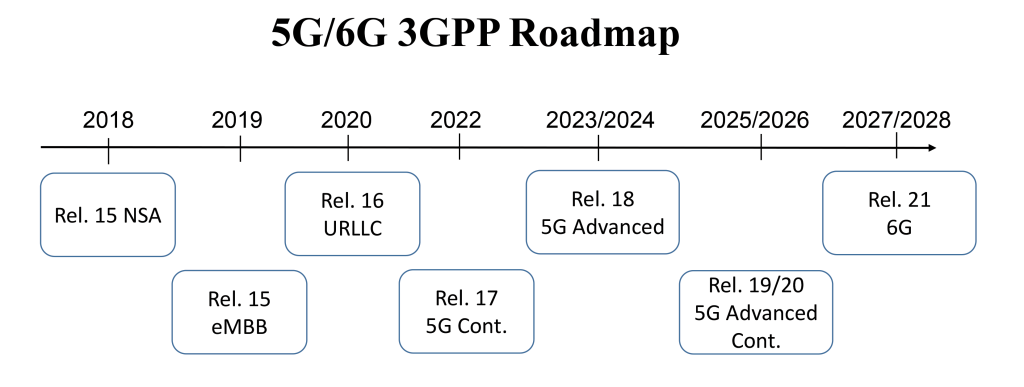
The 3GPP roadmap is continuously evolving to fulfill the larger 5G vision. In this initial 5G wave that began in 2018, 3GPP has already completed three major releases:  15, 16, and 17.

The schedule for 3GPP Release 15 included three separate steps: the early drop, focusing on NSA option 3; the main drop, focusing on SA option 2; and the late drop, focusing on completion of 4G to 5G migration architectures. While MBB is dominating the capex mix in this initial 5G phase, the 3GPP roadmap is advancing to address opportunities beyond MBB.

Release 16, also known as Phase 2, was completed in July 2020. The high-level vision is that Release 16 will provide the initial foundation for taking 5G to the next level beyond the MBB phase, targeting broad-based enhancements for 5G V2X, Industrial IoT/URLLC, and NR-U.

Release 17, also known as continued 5G expansion, was completed in early 2022. This 5G version provides more enhancements, extending operations up to 71 GHz with enhancements to IoT, Massive MIMO, Non-terrestrial networks (NTN), and DSS, among other things. With 3GPP Rel-17, a new device type (“NR Light”) was introduced, to address industrial sensors.


5G/6G 3GPP
Source: 3GPP


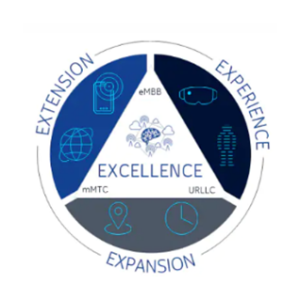
These initial releases have been key to the success of both MBB and FWA. But there are still shortcomings that need to be addressed, in order to fulfill the broader 5G vision. The current thinking with Release 18 and beyond (5G-Advanced or 5.5G) is that it will take 5G to the next level, creating a foundation for more demanding applications and a broader set of use cases. Nokia has articulated a vision in which 5G-Advanced helps improve experience, expand capabilities, extend the reach of connectivity, and spur operational enhancements.

Noika
Source: Nokia


Huawei is marketing the 5G-Advanced evolution as 1+1+N or 5.5G, to reflect the additional layer needed to realize ubiquitous Gbps speeds (current 5G is marketed as 1+N, where 1 represents the foundation network and N refers to the various capabilities and scenarios).

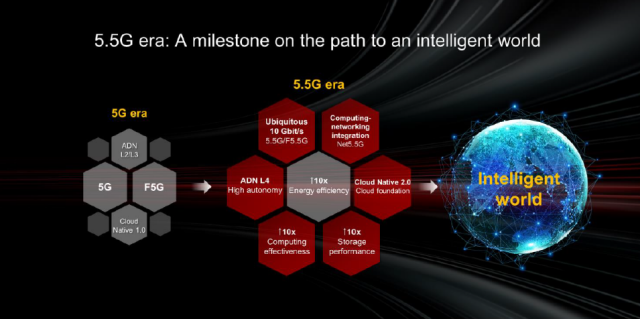
As expressed at Huawei’s most recent Huawei Connect 2022 summit, Huawei envisions that 5.5 G represents an important stepping stone toward a more intelligent world, utilizing AI and ML to improve customer experience and to autonomously optimize resources, ultimately reducing cost and energy budgets for the operators. Huawei also sees 5.5G as an important milestone on the path to improving overall capacity before 6G, based on the belief that 5G-Advanced can provide the right framework for delivering ubiquitous Gbit/s performance.


Source: Huawei


Ericsson also sees 5G-Advanced as an important extension in the 5G journey, envisioning that AI/ML will play an increasingly important role in supporting new applications and use cases.

Current Release 18 priorities may be summarized as follows:

  • UL coverage enhancement
  • Intelligent network automation (AI/ML RAN and core enhancements, NR data collection)
  • Flexible spectrum (DSS, CA enhancements, FRMCS < 5 MHz)
  • Energy savings
  • Critical IoT (Deterministic Networking, NR-Light evolution/reduced capability)
  • NTN enhancements (satellite-terrestrial integration)


What is needed for 5G-Advanced to become a success?

The majority of the features and enhancements currently outlined with 3GPP Release 18 will deliver incremental performance gains. In order for 5G-Advanced to drive another capex and marketing cycle and ultimately become something more than just another 3GPP release, multiple things need to happen.

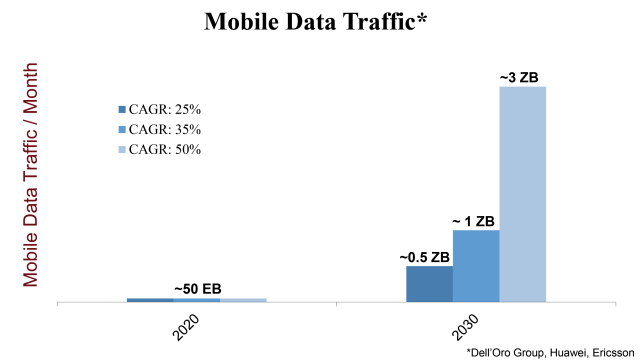
For one thing, mobile data traffic consumption needs to increase. According to Ericsson’s mobility report, global mobile data traffic increased 35–40% in 2021 and is projected to advance at a 30% CAGR over the next five years. At these rates of growth, existing sub-6 GHz and Millimeter Wave (mmWave) spectrum allocations will be more than enough to support another 10x of mobile data traffic expansion by 2030.


Mobile Data Traffic

But the same cannot be said if we move to a video-first world with the mobile network. With the typical phone user still spending less than 5% of total smartphone screen time streaming videos on the wireless network, the successful introduction of a new virtual reality (VR) or augmented reality (AR) device for the masses that would trigger a change in behavior—increasing the amount of time users spend consuming video on the mobile network—would from a RAN capacity perspective be a game changer, likely spurring massive capacity investments.

In this case, more spectrum would play a critical role in the broader capacity roadmap. The challenge here is that new near-term sub-6 GHz opportunities are currently confined to the Upper-6 GHz spectrum, which still lacks global coordination as a result of some countries questioning the commercial viability of allocating parts of or the entire 6 GHz band for 5G.

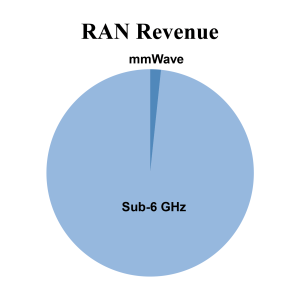
The implication is that the role of the mmWave spectrum will need to change. While mmWave has come a long way in just a few years, the reality is that the sub-6GHz spectrum continues to represent the most economical solution, enabling operators to minimize the need for incremental cell sites. Not surprisingly, mmWave still comprises less than 2% of global RAN investments. Technological breakthroughs combined with repeater improvements and increased use of reflective intelligent surfaces (RIS) will help to shrink the cost per GB gap between the sub-6 GHz spectrum and mmWave, ultimately putting this spectrum to better use.

RAN Revenue
Source: Dell’Oro Group


Since all LTE spectrum will eventually become 5G spectrum, DSS enhancements that can improve the spectral efficiency with 5G during various LTE load conditions should improve the DSS business case, thereby enabling operators to accelerate the shift from 4G to 5G.

Cellular IoT (CIoT), including Broadband and Massive IoT, continues to be successfully deployed across the world. According to the GSA and Ericsson’s Mobility Report, global CIoT connections approached 2B in 2021, up roughly two-fold since 2019. Still, CIoT accounts for a low single-digit share of total mobile data traffic and operator revenues. Although LTE is expected to address the lion’s share of the CIoT connections for the foreseeable future, a stronger focus on Deterministic Networking (DetNet), combined with technological innovation in IoT that can improve uplink rates and location precision, could provide a boost in some industrial settings.


5G RAN Implications

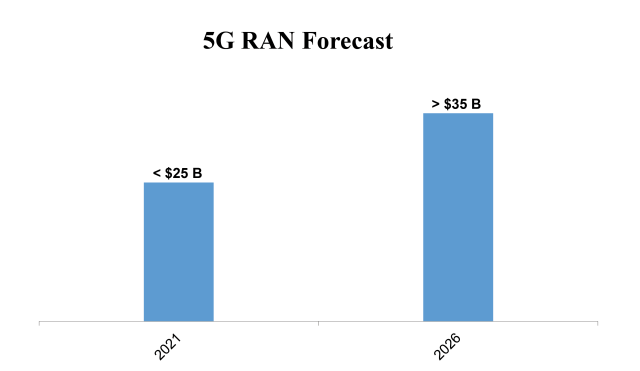
Following a couple years of exponential growth, 5G RAN investments are slowing. At the same time, it is still early in the broader 5G cycle. The message we have communicated for some time still holds: Our baseline scenario rests on the assumption that the 5G cycle will be longer and deeper than the LTE investment phase. And even though the base case is not predicated on the assumption that 5G-Advanced will drive another capex cycle, Release 18 and future releases are expected to play important roles in this next part of the 5G journey.

5G RAN Forecast Dell'Oro
Source: Dell’Oro Group


Beyond the RAN

The RAN is just one piece of the larger connectivity puzzle. As Huawei representatives pointed out during the company’s Connect 2022 Summit, the shift toward 5G-Advanced needs to be accompanied by improvements in core, storage, computing, optical, and data communications, to name just a few areas. ETSI just released another white paper focusing on the standards for fiber F5G Evolution, with the idea that more regular enhancements to the fixed network—combined with greater collaboration—will improve the synchronization between wireless and fixed evolutions.

We plan to discuss these topics further in future blogs. For more information about the 5G RAN forecast, please see the latest 5G Report.