I had the opportunity to attend Juniper’s annual analyst event held on September 15 and 16. During the two-day affair, Rami Rahim, CEO of Juniper, and his staff reviewed Juniper’s business and technology strategy. They were joined by a cadre of customers telling their story to why they chose Juniper. I also had the opportunity to sit down one-on-one with Samantha Madrid, VP of Security Business & Strategy and owner of Juniper’s security business, to dig deeper into their security strategy.
As I look back at the event from a network security purview, I see Juniper making three bets on growing security market share.
1. All Network Infrastructure is Security Infrastructure
Juniper seeks to position its entire product portfolio as part of its security vision and solution. They argue that security doesn’t stop at the network security solution, say a firewall, but extends to the total network footprint. They equally see the data center, WAN, and enterprise campus network infrastructure participating in their “Connected Security” security vision. Participation by the network infrastructure is two-fold. On the one hand, as a source of security telemetry, such as who is connected and where. On the other hand, as an enforcement point, where surgically precise remediation action can occur.
This bear hug of all infrastructure is a wise move by Juniper. According to recent revenue data in Dell’Oro’s routing, switching, and security reports, Juniper’s network security market share is nearly five times smaller than their routing market share and 50% smaller than their switching market share. Juniper is looking to leverage its more substantial non-security areas for the benefit of the security sales conversation.
2. Ease of Use Still Matters
Most, if not all, network administrators will say they feel like an unsung hero in their IT organization. When the network works, rarely does the network administrator get congratulated. But when it does go down, fire and brimstone readily come raining down. This means that network admins are eager for solutions to help keep the network going.
During the customer fireside chats, Juniper had the network director from a US municipality tout how Juniper’s SRX firewall solution had facilitated a significant reduction in the number of rules compared with their previous vendor. This customer further detailed their satisfaction with the day-to-day management environment spanning physical appliances on-prem and virtual appliances in the cloud.
Focusing on ease of use is never a bad bet. All too often, security solutions turn into science experiments that are more pain than gain.
3. Cloud-Based Security is the Future
Our data shows that we are at an inflection point in the network security market regarding form factor preference and market direction. We track three form factors in our network security program: physical appliances, virtual appliances, and SaaS (Software as a Service). Until recently, all three form factors were on a growth trajectory. However, due to the pandemic limiting physical infrastructure projects and a growing customer preference for cloud-delivered security, we expect the market in 2020 for physical appliances to decline 5%. The virtual and SaaS form factors will grow 6% and 27%, respectively.
Juniper sees the same writing on the wall and looks to pivot the cloud to a greater degree. Most of Juniper’s competitors have already entered the SaaS-based network security market (e.g., Secure Web Gateways). While no SaaS-based solutions were announced during the analyst event, the Juniper team made it abundantly clear that their direction was cloud-based and to expect future product announcements.
In summary, Juniper is making common sense bets, and we will be watching their developments with great interest.
To learn more about Dell’Oro Group Network Security and Data Center Appliances market research program, please check out the Network Security page for more information.
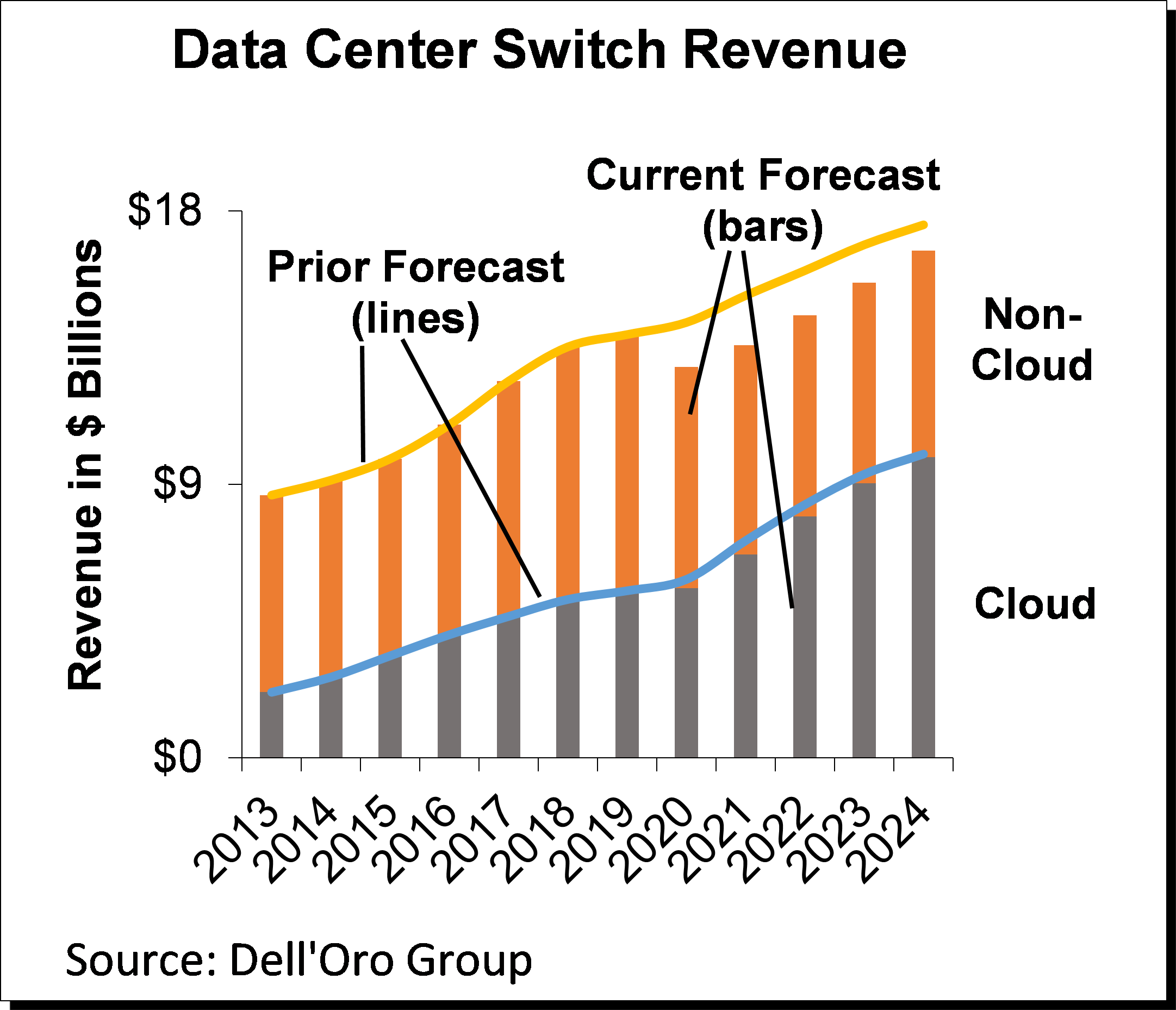

 Analysis of market performance during the prior two recessions was a fundamental part of our forecast process, as we assessed the impact of the COVID-19 pandemic. However, it is very important to recognize how this pandemic-induced recession may differ from the prior two recessions, not only at a macro level but also from a technology perspective. COVID-19 will bring many changes to our lives and will impact the adoption of technology in different ways. Some of these changes may be short-term, but we believe a number of them will remain with us for the long term. In the report, we detail our view on the potential impact of the COVID-19 pandemic on the market, in terms of both upside and downside. We also explain how and why this recession may differ from the prior two recessions. Our view is the result of numerous interviews over the last three to four months with end-users, system integrators, VARs, and manufacturers. Below are some highlights:
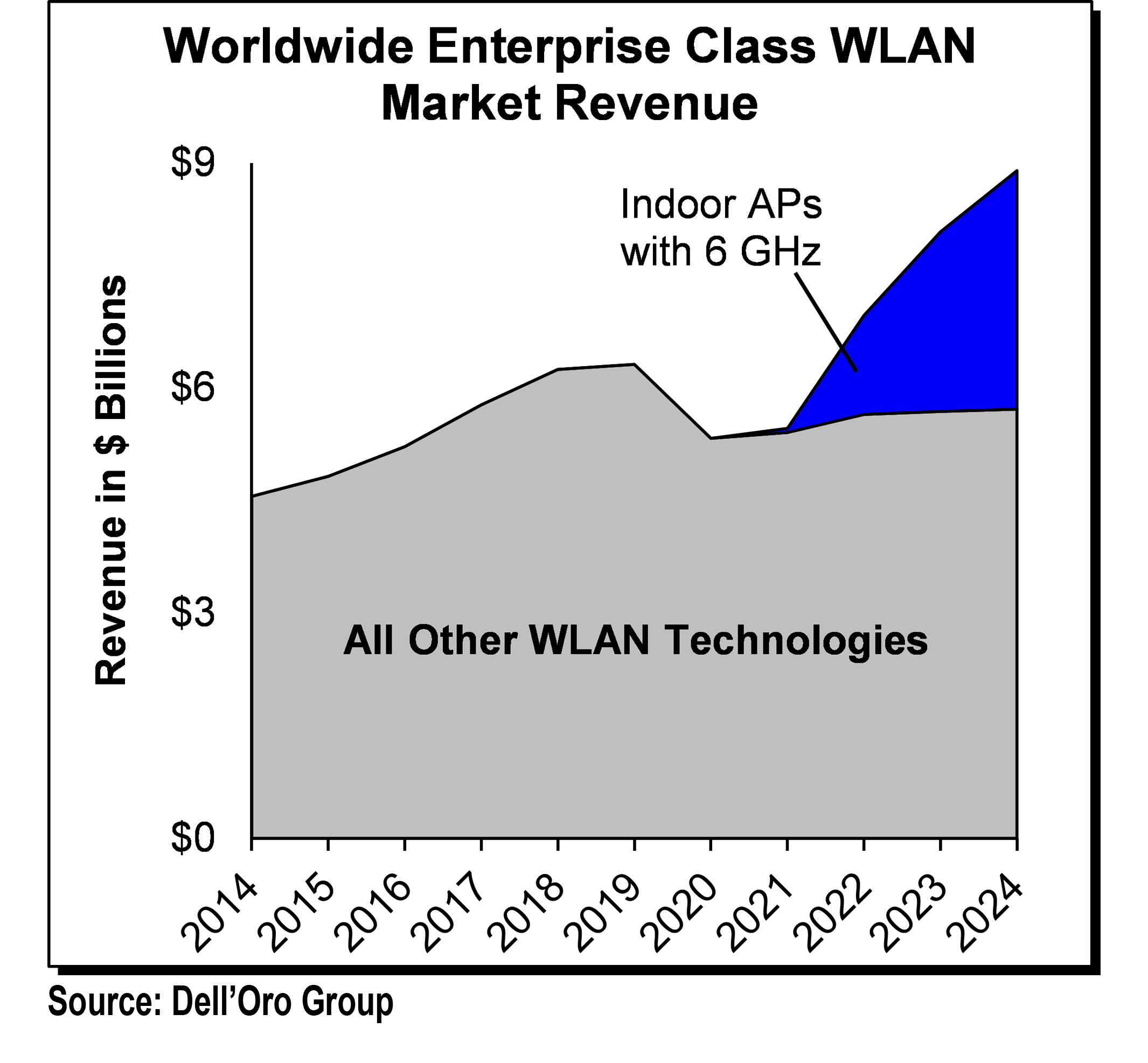 COVID-19 Near-Term Impact on WLAN Market