[wp_tech_share]
Musk, Satellites and the Future of the RAN

Elon Musk wants a bigger piece of the connectivity market. It is not clear how big a piece he wants, what the challenges are, or what his ambitions mean for mobile network operators (MNOs) and the terrestrial RAN market.

Recent commentary has become more ambitious. SpaceX estimates the addressable connectivity market opportunity is worth around $1.6 T, including $870 B for Starlink Broadband and $740 B for Starlink Mobile, consistent with the communications service providers (CSPs) revenue data published in the Dell’Oro Telecom Capex report minus devices and China, or roughly $8 ARPU for nearly 8 B users. More recently, SpaceX management has made clear that its goals extend beyond filling coverage gaps from space. In its 2Q earnings call, the company said it plans to build terrestrial infrastructure to complement its non-terrestrial network, potentially using large numbers of femto cells/small base stations deployed alongside Starlink terminals. The intention is not just to position for future growth opportunities but also to win more of the traditional carrier business – Starlink specifically called out the $0.6 T of revenue in the US.


Why would Elon Musk want to enter the CSP and MNO business in the first place?

Musk is widely considered one of the most successful entrepreneurs/visionaries of this era. He has already had three home runs with EVs, rockets, and satellites, with Physical AI and autonomous vehicles (AVs) among his next targets—all ultimately connected to his larger ambition of multiplanetary living. The traditional MNO market—with slow growth, high barriers to entry, enormous capital requirements, and roughly 10% net margins—does not look like a missing piece in this puzzle. How does connectivity fit into the bigger picture?

Understanding why SpaceX entered the satellite communications business in the first place is a good place to start.  After all, Starlink was not the first attempt to use satellites to disrupt terrestrial communications. The 1990s produced multiple LEO ventures, including Iridium, Globalstar, and Teledesic—the technology worked, but the economics did not. Investments turned into bankruptcies and abandoned broadband plans. The first LEO boom demonstrated that global coverage from space was technically possible. However, it did not demonstrate that it could be delivered economically at scale.

By controlling the rockets, SpaceX entered the game with a solid foundation. Falcon 9 and booster reuse changed the economics and ultimately allowed Starlink to build a constellation of 11K+ satellites with favorable capex relative to previous attempts, paving the way for Starlink becoming not just an important engineering pillar but also a vital economic engine­ for Musk’s bigger vision. Musk has previously stated that revenue from the satellite network could ultimately help finance a city on Mars.

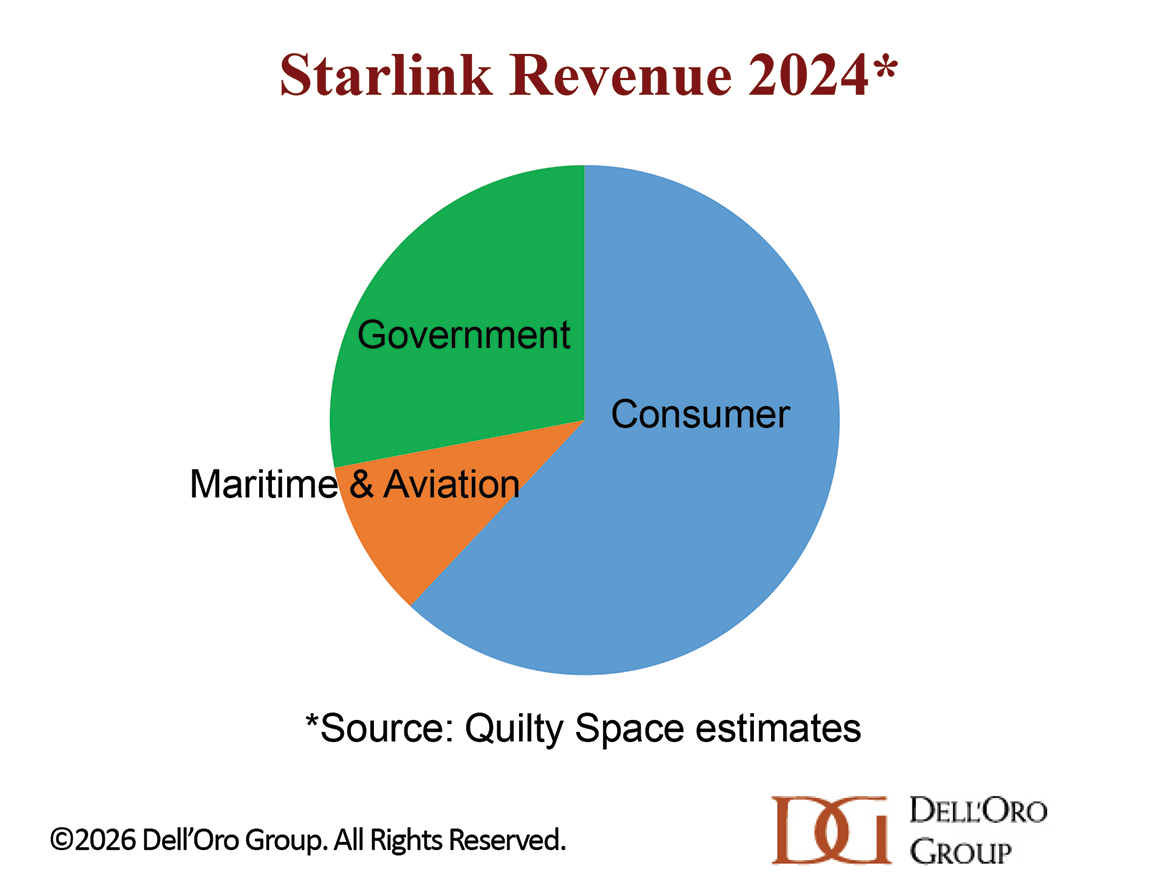
That background may also help explain SpaceX’s growing ambitions in mobile. Becoming another conventional CSP or MNO is unlikely the primary objective. Musk has repeatedly moved vertically when an external dependency becomes strategically important or when controlling another layer changes the economics. Rockets enabled Starlink, Starlink extended SpaceX into global communications, and D2D is now extending that reach directly to the smartphone.

From a connectivity perspective, Starlink addresses the geographic limitations with terrestrial RAN. While 4G currently covers around 90% of the global population per Ericsson’s Mobility Report, some estimates suggest geographic coverage is around 15% (per ChatGPT). Terrestrial mobile networks are extremely efficient where people are concentrated, but the math becomes less favorable as population density falls. Satellites work the opposite way, providing coverage almost regardless of where people—or machines—happen to be. What may have started primarily as a way to connect the unconnected has consequently expanded from rural broadband to ships, aircraft, enterprises, and now the smartphone.
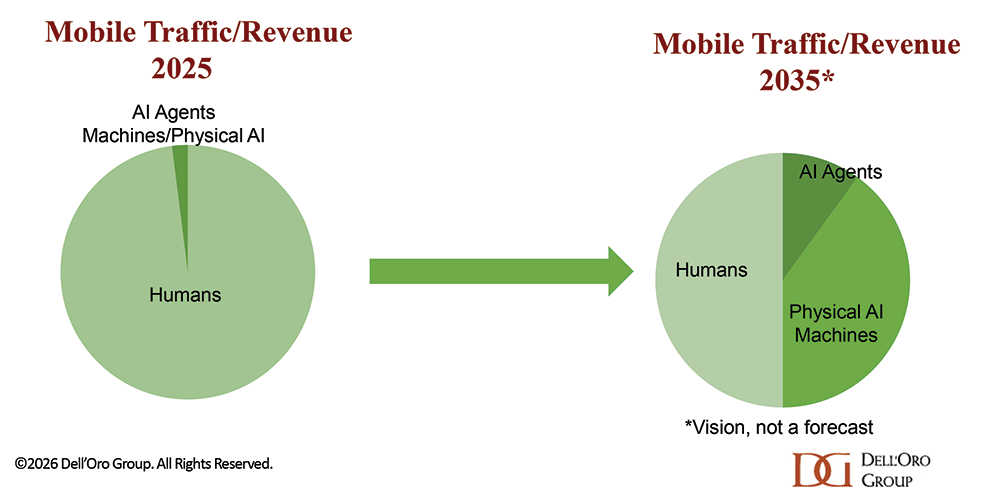
The strategic value of that capability could increase further in a world increasingly shaped by AI and physical AI. Today’s mobile network is designed and dimensioned for humans carrying smartphones, with most traffic and revenue ultimately generated by people consuming video, social media, and other applications. But in a world increasingly populated by AI agents, autonomous vehicles, robots, drones, and other forms of physical AI, human-driven traffic may eventually represent only one portion of the connectivity opportunity. Unlike humans, these machines might not remain concentrated within the existing cellular footprint. The traffic profile and ratios between indoor/outdoor, uplink/downlink, day/night, and dense/rural coverage could evolve if non-human-originated traffic comprises a larger share of overall mobile traffic, especially if Musk is right that these machines/robots will consume significantly more cellular traffic than humans using smartphones. Please note we don’t have a 2035 end-user forecast split for humans, AI agents, and machines—the illustration is more of a vision showing the three large buckets.
Viewed through that lens, Musk may care less about capturing another smartphone subscriber scrolling Instagram in Stockholm and much more about ensuring that a Tesla, Optimus robot, autonomous truck, drone, or some yet-to-be-invented AI-powered machine can remain connected wherever it operates. The recent push into D2D connectivity, mobile spectrum, and potentially terrestrial infrastructure therefore looks less like an attempt to build another conventional MNO and more like the gradual assembly of an end-to-end connectivity platform spanning terrestrial and non-terrestrial networks. Ubiquitous connectivity may simply be critical infrastructure for the AI and machine-driven world Musk is envisioning—and, as with rockets, batteries, charging, and AI, another strategic dependency he is increasingly unwilling to leave entirely in someone else’s hands.
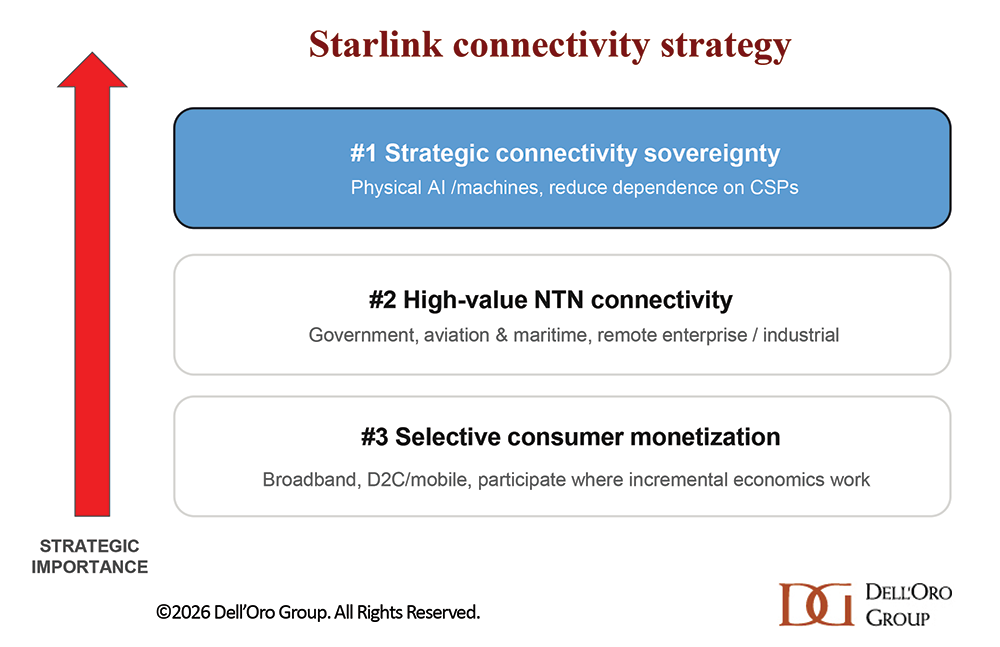
Strategic connectivity sovereignty does not mean SpaceX will ignore attractive commercial opportunities. The economics of satellite connectivity are already compelling in segments such as aviation, maritime, government, and remote enterprise/industrial, where terrestrial alternatives can be expensive or unavailable. And just as MNOs have learned to monetize excess mobile capacity with FWA, Starlink can selectively pursue consumer and enterprise opportunities where the incremental economics make sense.

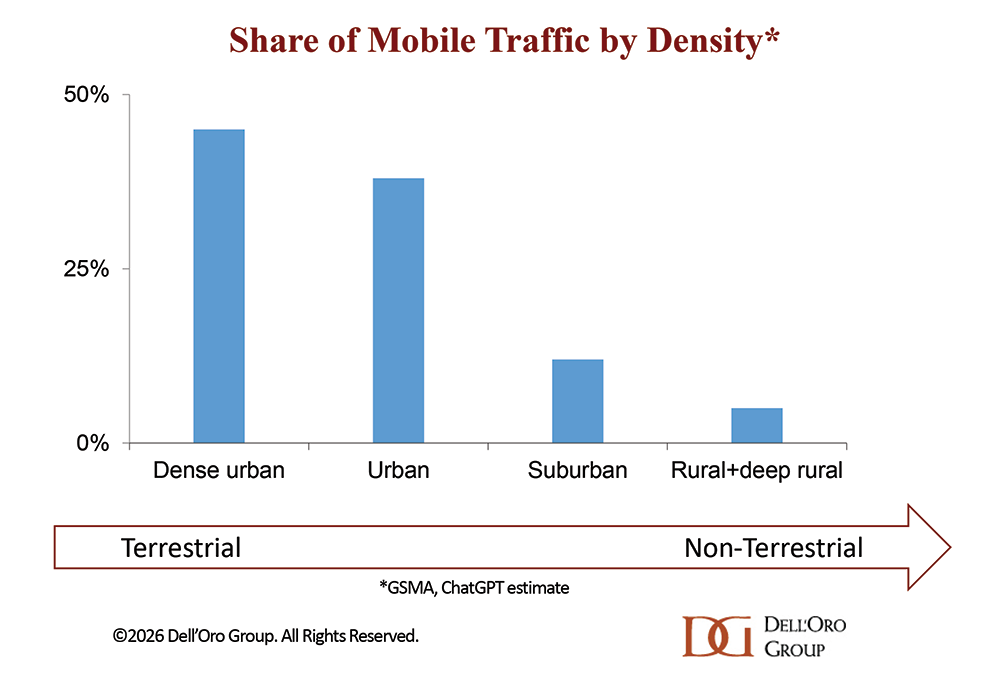
Ultimately, the addressable opportunity will vary enormously by density and geography: terrestrial optimizes capacity per km², while NTN optimizes geographic coverage.


What are the challenges?

If Musk’s ambition is to create a more ubiquitous connectivity platform spanning terrestrial and non-terrestrial networks, the fundamental question is – what are the big roadblocks? And the challenges are significant. At a high level, we can group them into three buckets: physics, assets, and ecosystem.

Physics is important. Even if Musk has an impressive track record of proving naysayers wrong and has already taken satellites much further than almost everyone thought possible, this can’t be overlooked in the world of wireless. Physics and the resulting economic challenges are the primary reason small cells and mmWave 5G did not live up to the initial hype.

Satellites are extraordinarily effective at solving the coverage problem — according to Sebastian Barros’ Telecom Newsletter, Starlink’s ~11 K operational satellites currently cover roughly 95% of the world’s landmass and maritime zones. But coverage and capacity are not the same. Terrestrial mobile networks achieve enormous capacity by dividing the network into increasingly smaller cells and repeatedly reusing the same spectrum.

A satellite beam covers a much larger geographic area, making the same degree of spectrum reuse difficult. This means the challenge is not aggregate capacity but capacity density. Satellite networks can spread enormous amounts of capacity across the globe, but mobile traffic is highly concentrated geographically. A terabit of unused capacity over sparsely populated areas cannot relieve a congested network in Tokyo or New York. Terrestrial RAN solves this problem through extreme spatial reuse, concentrating spectrum and capacity precisely where demand occurs. Satellites cannot replicate that density nearly as efficiently.

The link budget is also inherently asymmetric. SpaceX can put larger antennas and more power on its satellites, but it cannot change the antenna, transmit power, or battery constraints of an ordinary smartphone. Consequently, satellite connectivity can potentially eliminate many of the world’s remaining coverage gaps, but it is much harder to see satellites economically absorbing the enormous traffic generated in dense urban and suburban areas.

In other words, geographic coverage is SpaceX’s advantage while capacity density remains terrestrial RAN’s advantage. This is also why SpaceX’s terrestrial ambitions matter. If Musk wants more than coverage—if he ultimately wants a meaningful share of total mobile traffic, here defined to include humans and machines operating indoors and outdoors—he will undoubtedly need terrestrial radios as well.
That leads to the second challenge: spectrum and terrestrial infrastructure. SpaceX’s spectrum acquisitions materially improve its position, but building a competitive mobile network requires more than owning some spectrum and small cells. The incumbent MNOs have spent decades accumulating spectrum across multiple bands and deploying hundreds of thousands of macro sites engineered around propagation, capacity, interference, mobility, and indoor coverage. SpaceX is exploring whether it can address this cost structure differently, potentially deploying large numbers of small base stations alongside existing Starlink terminals and using the Starlink network for backhaul.

The concept is interesting because most current mobile traffic is consumed indoors, so if this works, it could complement the existing macro network. While it is early days and we haven’t had a chance to talk to Starlink about this concept yet, one challenge could be overlap—Starlink terminals are currently located where customers need satellite broadband, not necessarily where a mobile network needs capacity. In addition, they still need to figure out RF planning, indoor coverage, handovers, and interference—these steps don’t disappear just because the ratios between small cells and macros change. Spectrum itself remains scarce and heavily regulated. Ultimately, the deeper SpaceX moves into terrestrial mobile, the more it will face the same physical, regulatory, and economic constraints that have shaped the traditional mobile infrastructure market.

The ecosystem is another major challenge. The incumbent operators already have the spectrum, sites, fiber, customers, devices, distribution, roaming relationships, regulatory infrastructure, and operational experience required to deliver mobile service at scale. They can also respond collectively, whether through standards, roaming arrangements, spectrum partnerships, or alliances with competing satellite providers. Mobile connectivity involves far more than transporting bits—authentication, seamless mobility, voice, emergency services, device certification, billing, customer support, and roaming all need to work reliably. Regulation could also impact Starlink’s ability to operate a mobile network in some countries.

None of these challenges suggests that SpaceX cannot become a meaningful force in mobile connectivity. But they do suggest that replacing the terrestrial mobile network is a very different proposition from complementing it. Satellites give SpaceX an enormous structural advantage in geographic coverage, while the terrestrial incumbents retain an equally important advantage in capacity density, spectrum depth, infrastructure, and ecosystem. The more interesting question, therefore, may not be whether SpaceX can replace the MNOs or terrestrial RAN. Ultimately, the key question is how far they can go with their existing assets and how much further they want to go – where is the sweet spot?


Impact on RAN

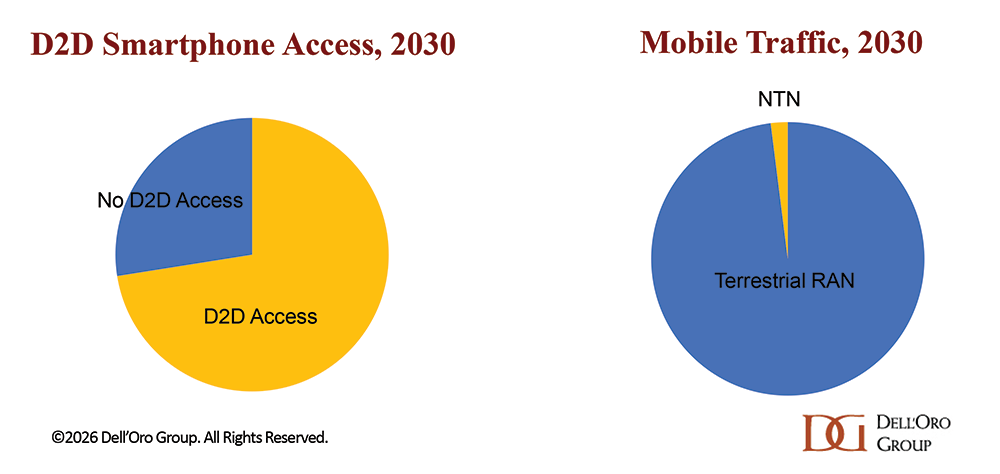
Our long-term position remains unchanged—we continue to believe that NTNs are highly important complements to today’s terrestrial RAN networks and the future is hybrid. But we need to separate the “addressable D2D smartphone opportunity” from the “addressable mobile traffic share.” The base case is that D2D will scale rapidly and most smartphones outside of China will eventually have access to satellite D2D connectivity. At the same time, physics won’t change. And since the base case is that mobile traffic (human plus machine) will grow at a 17% CAGR over the next five years with human-driven traffic still dominating (Ericsson Mobility Report), the mid-point scenario is for terrestrial RAN to carry more than 98% of the overall global mobile traffic by 2030.

Alternative outcomes are likely, especially if we extend the forecast horizon. Two significant swing factors include the mobile traffic share of physical AI/machines in outdoor settings and the reach of Starlink’s terrestrial ambitions.

If physical AI accelerates faster than expected and traffic patterns/profiles are more conducive to satellite connectivity, the overall NTN share could surprise to the upside.  Similarly, if Physical AI develops more slowly than expected, the traffic split between terrestrial and NTN could differ.

The physics favor terrestrial RAN for capacity and NTN for geographic coverage, and that won’t change. But Musk has a history of changing the economics around the physics.
[wp_tech_share]

Like a sailboat lying broadside to a supertanker’s wake, the Enterprise IT market is experiencing turbulence in the wash of massive AI infrastructure spending. With prices escalating, the LAN (Local Area Network) equipment market is already beginning to heel, and as the wake of the AI revolution spreads, more upheaval is on its way.

The first consequence of the trillions being spent on data center infrastructure is the shortage of available components left over for everyone else. Enterprise IT equipment, such as Wireless LAN (WLAN) Access Points and Campus Switches, is built using components that are not nearly as cutting edge and high performance as the ones that go into data center infrastructure for AI training. The IT market is facing shortages, nonetheless.


AI Infrastructure Spending Is Driving DDR4 Memory Shortages

Memory, in particular, has been front and center of collateral damage (see: The Growing Memory Tax on AI Infrastructure).  IT networking equipment uses an older generation memory (DDR4), but when the handful of memory producers shifted focus to the insatiable demand for High Bandwidth Memory for AI, DDR4 became hard to obtain, and therefore more expensive.

And “more expensive” seems like an understatement.

Over the past year, the spot price of DDR 8 Gbps memory chips has grown 788%. Vendors don’t usually pay spot prices, but this escalation demonstrates the kind of contract price pressures that systems vendors are facing.


WLAN and Campus Switch Prices are Growing as Memory Costs Escalate

Historically, memory was a small piece of IT equipment’s total cost to produce. For Campus Switches and WLAN, it was in the range of low-to-mid single digits of the total bill of materials.  But a component that represents 5% of the cost of a piece of equipment, and then grows in cost by 8 times, will increase the total cost of the equipment by 30%.

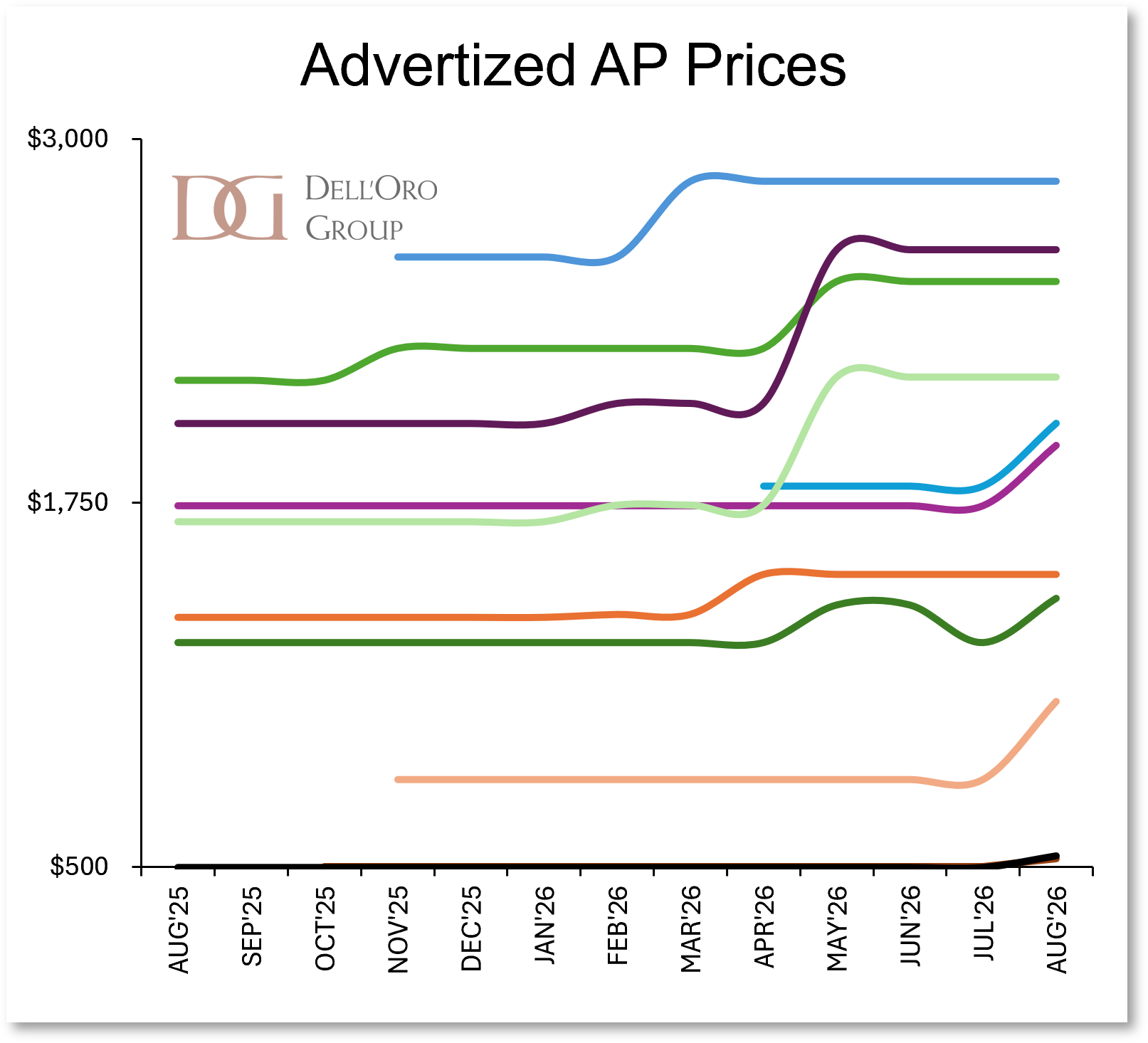
It is no wonder that nearly all WLAN and Campus switch vendors have increased prices at least once in the past year (some several times), as shown in a price graph of some of the most popular WLAN APs on the market.

Two years ago, WLAN or Campus Switch designs considered memory as a minor detail in the total cost equation, such that the equipment was not originally designed with memory efficiency in mind.  Even worse, in some cases, equipment was deliberately designed with more memory than required, to help make it future-proof and able to support yet-unknown applications.

Unfortunately, a simple swapping of one memory chip for a cheaper one inside a Campus Switch or WLAN AP is not as easy as it sounds. A new chip may involve a different board layout or power design; it may trigger firmware changes that would require regression testing.  A design change may necessitate new certifications in each market, adding costs and delays before a new product can be released.

This has left vendors scrambling to secure sources of memory in order to ensure a continued supply of APs and Campus Switches to the market. Lead times on some products have been variable, and vendors have shortened validity times for the quotes they issue, leaving them room to react to uncertain component pricing and availability.


Memory Shortages Are Expected to Shape the Enterprise LAN Market Until 2028

By 2Q26, most equipment vendors had reassured investors that sufficient memory supply has been secured for the next year or two.  However, supply shortages may still cause industry leaders some seasickness, and are likely to play out as follows:

  • Switch and AP prices are expected to rise even higher, although price growth should slow. With high levels of inflation affecting both DDR4 and DDR5, equipment prices are likely to remain elevated for several years.
  • Market demand could be suppressed. Although we have not witnessed any drastic downturns yet, it is common for enterprises to choose to wait to upgrade equipment or choose to take on smaller projects in order to avoid exceeding pre-established budgets.
  • Equipment lead times may continue to be uneven. Vendor terms and conditions (on returns, order cancellations, and quote price validity) are expected to remain tight.
  • Vendors may look for redesign opportunities, taking advantage of natural transition points (such as the introduction of Wi-Fi 8, or accelerated end-of-life dates) in order to deliver new, more memory efficient designs.

The return to some kind of memory supply-demand equilibrium is likely to occur as more memory-efficient equipment is released, and as more memory producers ramp up production.  These conditions are unlikely to be met before 2028.

Memory shortages are just one of the ways the LAN equipment market will be rocked by AI.  AI models are heightening cyber risks in the LAN, causing enterprises to perform security audits and focus on equipment patching and renewal.  Looking further ahead, once AI use cases are widely disseminated, there’s the possibility that LAN traffic patterns will change, leading to network redesigns. Under the pitch and roll of AI impacts, the IT industry will need to hold tight and focus on the horizon.

[wp_tech_share]

Memory has become an increasingly important factor in the cost of data center infrastructure, particularly as data center capex is projected to soar past $3 trillion by 2030. Strong demand for conventional DRAM, which is used across all server types, and high-bandwidth memory (HBM), which is used in AI accelerators such as GPUs, has driven memory prices sharply higher. Supply constraints have further intensified pricing pressures, increasing the cost of both general-purpose and AI-optimized servers.


DRAM Inflation Could Add Hundreds of Billions to Server Spending

DRAM pricing has risen significantly over the past year. Dell’Oro Group currently projects server DRAM average selling prices (ASPs) to reach approximately $10/GB in 2026, before gradually moderating toward the $5/GB range by 2030.

The impact on server spending is substantial. As a sensitivity analysis, if DRAM ASPs were instead held at approximately $3.50/GB from 2026 through 2030, roughly in line with pricing prior to the recent increase, higher DRAM pricing could add nearly 10% to cumulative server spending through 2030.

The impact will be most pronounced in 2026 and 2027, when we expect DRAM pricing to remain near its peak. Pricing should begin to moderate more meaningfully from 2028 onward as additional supply enters the market and the industry responds to the higher cost of memory.

Our outlook for the overall DRAM market has consequently increased significantly. The increase is not driven by pricing alone. We have also raised our forecast for DRAM bit demand alongside higher server unit shipments, supported by emerging agentic AI and storage-related workloads that are increasing demand for general-purpose servers in addition to AI-optimized systems.

However, we do not believe today’s elevated DRAM pricing can persist indefinitely without affecting the pace of infrastructure investment. Memory suppliers are expanding production capacity, including new capacity from China, while server and processor vendors are developing more efficient approaches to memory utilization. Together, these developments should help alleviate supply constraints and gradually normalize DRAM pricing over the forecast period.


HBM Faces a Different Cost Challenge

HBM represents an even more important consideration for AI infrastructure. Demand will continue to rise as high-end accelerators incorporate increasing amounts of memory to support larger models and more memory-intensive inference and reasoning workloads.

We project the average high-end accelerator to contain more than 500 GB of HBM by 2030. That estimate could prove conservative. AMD’s recently launched MI455X, for example, already incorporates 432 GB of HBM, illustrating how rapidly memory capacity per accelerator is increasing.

Unlike conventional DRAM, however, HBM may not benefit from the same long-term cost-per-bit declines. Increasing stack heights, density, bandwidth, and packaging complexity could keep the cost per bit elevated even as the technology advances. As a result, simply scaling today’s HBM architecture to ever-larger capacities could significantly increase the cost of future AI systems.

Continued advances in HBM manufacturing and advanced packaging will therefore be critical. Technologies such as hybrid bonding, higher-density HBM generations, improved yields, and eventually lower HBM ASPs could help offset some of the cost associated with rapidly increasing capacity per accelerator.

At the same time, the industry may need to reconsider how much HBM actually needs to reside directly alongside each accelerator. NVIDIA’s Rubin Ultra, for example, could ultimately incorporate less HBM than the approximately 1 TB originally envisioned. Improvements in model efficiency and memory management could reduce HBM requirements, while emerging technologies such as high-bandwidth flash (HBF) could complement HBM as a lower-cost, higher-capacity memory tier.


Memory Efficiency Will Become Increasingly Important

The AI infrastructure industry has so far focused heavily on increasing compute performance, but memory economics could become an equally important constraint on future system design.

For conventional servers, elevated DRAM pricing could add hundreds of billions of dollars to infrastructure spending over the next several years. For accelerated servers, rapidly increasing HBM capacity and complexity could place additional pressure on already-high system costs.

Memory suppliers also face an increasingly complex balancing act in allocating production capacity across conventional DRAM, HBM, and NAND flash. With demand rising across servers, AI accelerators, and storage, suppliers will need to prioritize capacity and investment across these markets. The recent increase in DRAM and NAND pricing could make capacity expansion in these markets more attractive, complicating suppliers’ decisions on how aggressively to prioritize HBM production.

The industry response will therefore need to come from both sides: more memory supply and lower manufacturing costs, but also more efficient use of memory within servers and AI systems. Improvements in memory architecture, packaging, software, and additional memory tiers could become increasingly important in determining how economically the industry can continue scaling AI infrastructure through the end of the decade.

[wp_tech_share]

Last week, I was invited to attend Microsoft’s latest security launch, and it reinforced a central tension in enterprise cybersecurity: Agentic AI systems become more effective when they have deep access to telemetry, context, and enforcement controls. Yet the same integration that improves their effectiveness can also pull customers more tightly into one vendor’s platform.

Microsoft showcased four technologies at the launch event. Microsoft Perception is designed to coordinate security context, models, specialized agents, and enforcement mechanisms across Microsoft’s security estate. Red agents test environments, blue agents investigate threats, and green agents recommend or execute remediation. MDASH extends the architecture into source-code vulnerability discovery and developer workflows. MAI-Cyber-1-Flash provides a specialized model for part of that work, while Microsoft Security FORGE Labs will pursue more autonomous vulnerability discovery and remediation.

Microsoft’s potential advantage is the number of enterprise control planes it can connect. Defender supplies endpoint and security-operations context. Entra provides identity information. Azure contributes cloud context and enforcement. GitHub and Azure DevOps connect the system to source code and development workflows. A deeply integrated environment could allow an agent to move from a threat-intelligence question to an investigation, determine which identities and assets are exposed, apply a temporary control, and propose a permanent code fix. Context can be assembled before a model begins reasoning, potentially reducing ambiguity, latency, and processing costs. Native permissions and APIs may also make actions more reliable than loosely connected third-party integrations.

The role of temporary controls connects this development directly to Dell’Oro Group’s Network Security research. Firewalls, web application firewalls, workload controls, and other enforcement points could increasingly provide machine-generated shielding while application teams develop and validate permanent fixes. Microsoft demonstrated this type of workflow through custom detections, posture changes, application protections, and proposed code remediation.

Microsoft is not alone in pursuing this strategy. Palo Alto Networks is connecting security operations, cloud security, application security, agent orchestration, and network enforcement. CrowdStrike is building agentic workflows around its security operations platform and third-party ecosystem. Google can combine security operations, threat intelligence, cloud security, vulnerability research, and developer tools. Each vendor wants its platform to become the place where agents obtain context, make decisions, and coordinate action.

Agentic security could therefore accelerate security platform consolidation. Customers may prefer agents that arrive with preassembled context, tested tools, and established permission models rather than having to build cross-vendor workflows themselves. Vendors with broad telemetry and enforcement portfolios may also be able to improve their agents through operational feedback across more customers and use cases.

However, most large enterprises will remain multivendor. They may use Microsoft identity and productivity tools, Palo Alto firewalls, CrowdStrike’s endpoint platform, Google Wiz for cloud, and specialized products for application or data security. An agent that reasons accurately only inside its own vendor’s environment will provide an incomplete view of risk.

This challenge is particularly relevant to Dell’Oro Group’s AI & Cloud-native Security research, where risk context and enforcement are already distributed across cloud configurations, identities, workloads, application pipelines, and third-party security platforms. Agentic systems may improve how those signals are correlated and acted upon, but they do not eliminate the need to normalize data and coordinate controls across heterogeneous environments.

Microsoft acknowledged that third-party data quality, normalization, permissions, and enforcement remain difficult. Security data is inconsistent, customers frequently limit centralized ingestion because of cost, and external products expose different control mechanisms. Microsoft is exploring approaches such as data federation, but Perception’s practical openness will need to be demonstrated in customer environments.

The same test applies to competing platforms. Supporting connectors or open agent protocols does not by itself create reliable interoperability. Vendors must demonstrate that agents can interpret external evidence correctly, preserve source attribution, respect permissions, and execute actions without losing the safeguards available inside native products.

Openness also applies to models. Microsoft is pursuing a multi-model architecture but expects to certify supported configurations rather than permit unrestricted model substitution. That approach can improve quality and accountability, although customers may require different models because of sovereignty, cost, availability, or organizational policy. Platforms will need to balance customer choice against the risks created by untested combinations.

The market is approaching a practical contest between integrated performance and ecosystem reach. Broad platforms should have an advantage when their native products already dominate the customer environment. Openness will matter more as agents depend on external data sources and attempt to act across competing control planes.

Perception makes Microsoft’s platform opportunity visible, but it also sharpens the requirement for neutrality. Agentic security cannot become an enterprise operating layer unless it works across the enterprise that actually exists. The strongest platforms will not merely offer the largest collection of native agents. They will combine deep integration with credible operation across competing products.